Northern Territories and Indigenous Peoples: Comparative perspectives
14 – 19 January, 2018

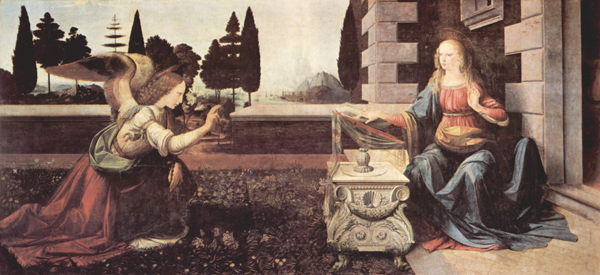
VIU is glad to integrate its art program with the Supplementary Art Course on Introduction to Italian Renaissance Painting.
Course Aim:
The main aim of this short course is to provide an introduction to one of the most fascinating period of the Italian Art.
Through the discussion of several paintings presented in class, the participants will build an understanding of the main characteristics of the Renaissance style and of the conditions that led to it. Another point of interest will be to follow the evolution of Renaissance from its beginning in Florence to its spreading through other Italian cities until its maturity during the "great Cinquecento". The art works will be analyzed against the background of religious, social and political conditions in Renaissance Italy.
The course will involve a final site visit to Florence.
Participation to the Course:
"Italian Renaissance Painting" is offered to anyone interested and as a supplementary Art course to VIU students.
Students can participate also as auditors, the entrance at the Uffizi Museum during the trip in Florence is however sponsored only to VIU students who have attended all classes.
All participants attending all classes and the visit will receive a final certificate of attendance.
To obtain a certificate of completion, you must attend all classes, participate to the site visit in Florence and write a short paper of 4500-6000 words: VIU will issue a certificate recognizing the completion of a 20 hours course - the final evaluation will consider participation to class discussion (20% of the final grade) and the short paper (80% of the final grade). To students enrolled in Art and Architecture in Renaissance Venice prof. Modesti will also recognize a bonus towards the final evaluation of her course.
Readings:
Berenson, Bernard, The Italian Painters of The Renaissance, Phaidon, London 1912
Burckhardt, Jacob, The Civilization of the Renaissance in Italy, Phaidon, London (ed) 2006
Gombrich, Ernest, The Story of Art, Phaidon, London 1961
Nichols, Tom, Renaissance Art. A Beginner's Guide, Oxford 2010
Additional readings might be suggested during the classes.
Class schedule:
Friday October 13, 12.30 - 4 pm Room 9D
Friday October 27, 12.30 - 4 pm Room 9D
+ Friday, November 10, all day: site visit to Florence
"Maintenance of international peace and security: destruction and trafficking of cultural heritage by terrorist groups and in situations of armed conflict"
10-11-12 November 2017, Venice International University
This will be the second edition of the joint initiative of Venice International University, Ca’ Foscari University of Venice and Venice Diplomatic Society (VDS), and this year the European Inter-University Centre for Human Rights - EIUC.
The VeUMUN is an excellent opportunity for students to gain an understanding of multilateral diplomacy, and to hone their negotiating and leadership skills while practising public speaking. Participants will act like real UN delegates participating in sessions of various UN committees; a group of students will also form the Press Corps, reporting on developments during the weekend of activities.
The MUNs have certain common goals: providing a deeper understanding of multilateral diplomacy; strengthening negotiating and leadership skills; improving the ability to anticipate evolving scenarios of complex issues. In simulations lasting a few days, Delegates are called upon to debate about specific issues related to the domain of international relations ultimately producing a Resolution about the debated topic.
The Venice Universities' Model United Nations will take place at Venice International University with a focus on threatened heritage.
Places are limited and participation is open to students of Ca' Foscari, EIUC, VIU and VIU member universities with an interest in international relations, international law, cultural heritage and United Nations working procedures.
The participation in the VeUMUN simulations is free of charge. Lunch break and public transports are at participants’ expense.
VeUMUN benefits from the generous support of:
Europe Direct, a European network designed to inform citizens about the activities and opportunities offered by the European Union, is also partner of the event and will be present on November 10 with an informative desk and thematic publications.
Info: http://www.comune.venezia.it/europedirect - Eng: http://europa.eu/contact/index_en.htm
San Servolo - Servizi Metropolitani di Venezia, the company owned by the Metropolitan City of Venice, responsible for the management of the services on the island of San Servolo.
Info. http://servizimetropolitani.ve.it/ - Eng. http://servizimetropolitani.ve.it/en/
Application deadline: October 8
admitted candidates will be notified by: October 12
selected candidates must confirm their participation by: October 16.*
* Withdrawals after October 16 will be accepted without consequences only in case of: certified university commitments and health issues. Selected candidates who fail to show up on the first day of simulation without any of these justifications will be banned from similar VDS or VIU activites during the academic year.
Download VeUMUN Study Guide and Schedule (pp. 14-15) pdf 5.66 MB
Applications and attendance
The participation is open to students of Ca' Foscari, EIUC, VIU and VIU member universities. This activity is highly recommended for students attending the VIU course F1712 Global Governance for Peace and Security, Cooperation and Development (Prof. Sara De Vido).
A 30 h preparatory workshop will be organized at Ca' Foscari university, dedicated to Ca' Foscari students and compulsory for attendants of the HNMUN 2018 at Harvard.
An intensive workshop for VIU and EIUC students will be organized on San Servolo island on October 20 (2pm - 6.30 pm) and 21 (9 am - 1.30 pm).
Download VIU workshop schedule (pdf, 186 KB)
Participants must attend at least 70% of the activities (VeUMUN November 10-11-12 and the preparatory workshop), a certificate of attendance will be issued.
Further information
Participation and logistics:
Venice International University
Isola di San Servolo 30133 Venice - Italy
e-mail: shss@univiu.org
Tel. +39 041 2719 511
VeUMUN 2017 content and preparation:
Venice Diplomatic Society
e-mail: veumun2017@vdsviews.com
11-14 November 2017
General description
The school focus is related to a new strong historiographical trend in medieval studies. Namely, this is a reexamination of “republican” or “democratic” tendencies within the medieval society. The Autumn School’s general aim is to bring together the scholars who concentrate on horizontal political ties within the medieval society.
Traditionally, the “democratic” tendency was described in historical scholarship as an extremely vertical one, where a feudal hierarchy prevailed upon the horizontal ties. Thus, in the second half of the twentieth century the elitist research paradigm focused mostly on the land-endowed nobility. Arnold Esch argued that such a focus is nothing but a result of the state of the source base, in which land acts that have survived in the Church archives prevailed. However, that testifies only to the better preservation of the church archives. Ignoring this fact, we risk making the Middle Ages even more agrarian and even more religious than they really were.
However, in the 1980s a new historiographical tendency has appeared, that focused on various republican political practices, such as public deliberation and acclamation. In the perspective of this new trend, even the churches’ inner life appeared to be deeply rooted in collective action and decision-making. After a new political self-government reality – an urban commune had appeared in the eleventh century, republican practices started to flourish. Codified law replaced the brutal force and the legal custom as the main means of regulation of social relations. At the same time, the law-making itself became a task for those to whom these laws applied, and the community of citizens directly involved in the decision-making became a political actor claiming at least legal autonomy, or even a political independence. That was exactly a “Liberty of the Ancients” that Benjamin Constant wrote about, contrasting it with “Liberty of the Moderns.” However, the latter would be impossible without the former, to which it gave birth. The Modern Time and its ideas did not appear out of nowhere. It was urban communes that rediscovered Antiquity, looking for new legal forms.
Thus, the routes of modernity are closely connected to the horizontal practices of the Middle Ages. Machiavelli and Montesquieu cannot be imagined without comprehending the republican experience of Florence, Venice and other medieval communes. The communal development created a new society where a man, his rights and property were protected by a codified law. Therefore, it is evident why we consider Venice as symbolically the best place in the world for a discussion about medieval republicanism..
Course aim
The Autumn School focuses on urban and countryside communes, first forms of proto-parliaments (like Etats Généraux in France), Orders of Knighthood, universities and other self-governing and autonomous societies in this period. The main school themes are political practices: public deliberation, voting, selection by lot, direct political participation, as well as republican notions in the texts written before 1500 A.D.: virtus, res publica, libertas and dignitas. Medieval republicanism will be discussed also in its connection to the past and to the future. In our proposed program the following questions will be discussed: can one consider medieval practical republicanism a heritage of Antiquity or not? How did it contribute to the further development of republican theory and practices in the Modern time?
Topics
Republican Forms of Medieval Europe
Enterprising Politics or Routine Dealings? Political Participation in Europe before 1800
The Italian urban communal liberties
Ideals of Brotherhood in Chivalric Orders
The West and the East of Europe: Similarities and Differences:
“Tota Livonia”: the republican practices in Medieval Livonia
Democracy or Oligarchy. The city assembly in Novgorod and Venice
The medieval communal concepts of power in a comparative perspective
Workshop: The faculty participants and graduate students will present papers on their particular topics.
Target
Master and PhD students from any university are welcome to participate: they are encouraged to present their own topics.
Fees
Students of VIU member universities:
No participation fees.
Students of other universities:
€ 200 incl. VAT
The fees will cover tuition, course materials, accommodation in multiple rooms at the VIU campus, lunches in the VIU cafeteria and social events.
Student participants will be responsible for covering their own travel expenses to and from Venice, local transportation and evening meals.
The School will provide a limited number of partial travel grants for participants from VIU member universities.
Credits
Number of ECTS credits allocated: 2
A Certificate of attendance will be issued at the end of the course.
Duration and period
4 days, 11 - 14 November 2017
Location
Venice International University, Island of San Servolo, Venice (Italy).
Applications
July 28 – September 4, 2017.
For further information
summerschools@univiu.org
International PhD Academy
18-22 September 2017