TEN Program on Sustainability

21st International Society for Business Innovation and Technology Management Conference

The "21st International Society for Business Innovation and Technology Management Conference" will focus on Responsible & Sustainable Consumption and Production and gathers a variety of experts from Asia and EU (May 3-5, 2017, VIU, Isola di San Servolo).

The Conference is jointly promoted by Venice International University (VIU) and the International Society for Business Innovation and Technology Management (ISBITM) in cooperation with De La Salle University (Philippines) and Lunghwa University of Science and Technology (Taiwan).

Hosted at Venice International University premises on the island of San Servolo in Venice (May 3-5, 2017), the Conference aims to provide a forum for the exchange of ideas on the latest international business innovation developments in the field of management among researchers and practitioners. The conference is also expected to foster networking, collaboration and joint effort among the conference participants to identify major trends in business decision making model for responsible consumption and production.

The International Society for Business Innovation and Technology Management (ISBITM) is a leading professional association for scholars dedicated to creating and disseminating knowledge about innovation & technology management and organizations. It includes European Business Innovation and Technology Management Society (EUBITMS), Asia Pacific Business Innovation and Technology Management Society (APBITMS), African Business Innovation and Technology Management Society (AFBITMS) and American Business Innovation and Technology Management Society (USBITMS).

A limited number of participants can be admitted.

If you are interested in participating, please contact ilda.mannino@univiu.org.


Critical Infrastructure Resilience Summer School - II Edition 2018

July 16 – 20, 2018

In its second edition, the VIU Summer School on Critical Infrastructure Resilience (CIR) brings together academics and professional experts to discuss an emerging topic with a pragmatic and scientific approach.
The School, led by the University of Rome Tor Vergata, explains how critical infrastructure works and fails; its cascading impact from local to global, and the strategies to use to build a resilient society.
 
The course will discuss the concept of CI and the EU framework, and present a series of tools and solutions for resilience. The participants will gain (i) a clear understanding of the key concepts, (ii) a methodology to apply it to their specific field/scale, and (iii) an overview of specific tools and solutions from recent applications. The course consists of a mix of theoretical knowledge, case studies/projects and hands-on exercises. The beautiful city of Venice is an ideal place that participants can use to identify a critical infrastructure, assess its risk and develop resilience strategies.
 
Applications via the VIU website: February 27 – March 29, 2018.
 
Faculty
Erdem Ergin, University of Rome Tor Vergata/World Bank - Coordinator
Mitsuyoshi Akiyama, Waseda University
Marcus Abrahamsson, Lund University
Jonas Johansson, Lund University
Gaetano Vivo, European Commission
Carlo Giupponi, Università Ca’ Foscari Venezia
Charles Baubion, OECD
Federico Carturan, RiskApp
 

Course outline
The 5-day course consists of 10 modules: 

M1 – Definition & role of critical infrastructure
M2 – The EU framework
M3 – Cascading impacts & ranking criticality
M4 – Risk assessment & developing scenarios
M5 – CI Resilience solutions from infrastructure, business and agriculture
M6 – Key policy challenges to critical infrastructure resilience 
M7 – Life-cycle-based design and assessment of civil systems under multiple hazards
M8 – Critical Impacts of Climate Change on Transport Infrastructure Planning
M9 – Decision-making under uncertainty
M10 – RiskApp, presentation and logic of a cascading impact estimation software

Target
Graduate students and working professionals from any university, research institute, or other organization (private companies, government agencies, NGOs) with an interest in critical infrastructure issues and ability to read and write fluently in English. Advanced undergraduates will also be considered.

Application procedure and costs
Students of VIU member-universities: € 300 incl. VAT.
Students of other universities/professionals: € 600 incl. VAT.
The fees will cover tuition, course materials, accommodation in share rooms at the VIU campus, lunches in the VIU cafeteria and Social events.


Deadlines
Applications via the VIU website: February 27 – March 29, 2018.
Admitted candidates will be notified by April 5 2018.
Payment of the fee by April 12, 2018

For further information: summerschools@univiu.org


EAERE-FEEM-VIU European Summer School in Resource and Environmental Economics

Climate Change Assessment: Economic Models and Evaluation Criteria

June 30-July 6, 2018

The summer school is promoted in cooperation with the European Association of Environmental and Resource Economists (EAERE) and Fondazione Eni Enrico Mattei (FEEM) and takes place at the VIU campus on the Island of San Servolo, in Venice, located just in front of St. Mark's Square.

The objective of the 2018 School is to provide students with a broad understanding of the theory and practice of welfare assessment of economic climate change models, and more generally in the evaluation of long-term environmental economic problems. We focus on two different perspectives: (i) how to construct analytical and numerical climate change models; and (ii) how to design appealing welfare criteria for climate change assessment.

Different economic models and evaluation criteria can lead to vastly different policy recommendations, partially undermining their influence. Some models and criteria can imply pathologic or socially unacceptable implications; for example, when evaluating risk, uncertainty, inequalities, and endogenous population. These issues are addressed in a synthesis of the modelling and evaluative perspectives, following the recent advances in climate change economics.

Applications deadline: February 15, 2018.

Programme
The Summer School is designed to last for 6 days and consists of about 35 contact hours and further several hours of scheduled reading and consultation time. The content of the School is a mixture of lectures, student presentations, consultation and reading sessions.

The activities open with a Welcome and Introduction session, in which the Summer School topics are introduced. A general open discussion, where all the lecturers are invited to briefly present their topics, can be organised to facilitate the students to become soon more familiar with the lecturers’ topics.

Each lecturer is expected to give a 3 hours lecture. Each student is also expected to make a presentation of about 40 minutes, which include also the time for questions and discussion. Students' papers must be completed and sent to the Summer School Secretariat by the 1st of June, 2018. In order to get prepared to the School, students will receive in advance all the available teaching material and the papers presented by the other participants.

In the reading sessions students can privately take their time to go into what really interest them thoroughly.

During consultation sessions students can privately consult with lecturers. It is up to the students to ask directly to a lecturer for a private meeting. Group consultations can be organised too. Private or group meetings during the consultation time can be held inside the classroom, which remains open until the end of the consultation session, or in any other available space of the VIU Campus such as in the cafeteria, in the beautiful garden surrounding the campus or in the campus' common areas. It is up to the students and lecturers to make the consultation as much formal or informal as they prefer. Also working groups can be organised during the consultation time. We strongly encourage all the students to take most advantage of the consultation time from the very beginning of the School.

Faculty
Matthew ADLER, Richard A. Horvitz Professor of Law and Professor of Economics, Philosophy and Public Policy, Duke University
Geir ASHEIM (School Co-Coordinator), Professor of Economics, University of Oslo
Marc FLEURBAEY, Robert E. Kuenne Professor in Economics and Humanities Studies, Princeton University
Reyer GERLAGH, Professor of Environmental Economics, Tilburg University
Paolo PIACQUADIO (School Co-Coordinator), Associate Professor of Economics, University of Oslo,
Christian TRAEGER, Professor of Economics, University of Oslo

Admission and Fee
The Summer School is targeted to doctoral and post-doctoral students. Admission is conditional on the presentation by each student of his/her doctoral work; Ph.D. students are expected to be in the process of writing a thesis chapter on positive or normative aspects of welfare assessment of climate change (or related long-run integrated policy assessment problems). Attendants will present their research and will receive valuable feedback from the other participants as well as from the School lecturers. An assigned tutor will provide individual feedback during consultation time.

Application is restricted to 2018 EAERE members.

Accepted applicants will be requested to pay a participation fee of EUR 300. The participation fee includes:

_accommodation in double rooms shared with Summer School colleagues for the duration of the School (from June 30th, 2018 for a maximum of 7 nights); single rooms can be provided on request: extra costs are to be covered by the applicant;
_breakfasts, lunches and dinners included in the School programme;
_downloadable course material;
_participation diploma.

The School Organisers make available a limited number of scholarships for the coverage of the travel costs for participation in the School. Please indicate in the application form if you would like to apply for a scholarship.


Deadlines and contacts

15 February, 2018: Deadline for applications
1 March 2018: Acceptance notifications will be sent out after March 1st, 2018
15 March 2018: Deadline for payment of the participation fee.
1 June 2018: Delivery of final papers: Final papers for presentation must be received by the Summer School Secretariat before the June 1st, 2018.


Summer School Secretariat

Fondazione Eni Enrico Mattei

ess@feem.it

www.feem.it/ess18


Environmental Management and Security

Focus
Today we are facing important global challenges in terms of climate change, political transitions, population increase, energy access, health issues that pose Security at the center of a common reflection.

The environmental, social and economic pillars are the framework of sustainable development. In order to preserve the environment and guarantee the needs of future generations, environmental management needs to combine several aspects such as waste management, water quality, air monitoring, pollution prevention, sustainable agriculture, food safety & security, energy & energy efficiency, urban innovation, both at a global and local scale. With a growing population worldwide, those aspects can significantly contribute to secure peace and wellbeing.  

In the last 10 years, VIU has developed research and capacity-building projects focused on studying and disseminating knowledge about strategies and the dynamics of environmental management and security in terms of environmental protection, transboundary issues, natural disasters and energy security.

Researchers with different backgrounds (e.g. economics, environmental sciences, law) are involved in those projects, thus contributing to highlight the multiple factors involved. The scale of the projects carried out in this area ranges from local to international.

Goals
- To promote capacity building for professionals and policy makers on topics of environmental management
- To strengthen the dialogue among scientific, corporate and governmental institutions in order to ensure collaboration in facing environmental management and security challenges
- To promote interdisciplinary approach to integrate economic, environmental and social aspects when dealing with those issues

Projects
In line with VIU methodology, networking and building communities around discussion topics is at the basis of our approach to projects, with the aim to activate competencies in a variety of disciplines. Our projects on this focus area are built around:

Capacity building to policy makers and professionals as short training sessions addressing a specific topic approached through a multi-disciplinary perspective. In-class sessions and site visits supports the adopted methodology.
Communication and Dissemination on research results to different stakeholders, e.g. policy makers, business community, citizens, scientists.
Research on policy and strategies on environmental management, including economic aspects and consumers' behaviour.


---
In line with VIU's mission and commitment to promote Sustainable Development and the 17 Goals of the United Nations 2030 Agenda, this Focus Area addresses the following:

Goal 02 Zero Hunger Goal 06 Clean Water and Sanitation Goal 09 Industry, Innovation and Infrastructure Goal 11 Sustainable Cities and Communities Goal 13 Climate Action Goal 15 Life on Land Goal 17 Partnership for the Goals


Ethics and Digitalization Conference 2020

Live stream, October 1 2020, 1:30 - 7:30 pm

Hosted by Cultural Entrepreneurship Institute Berlin, in cooperation with Venice International University. 

The aim of the second Conference Ethics and Digitalization - Live stream, 01.10.2020 is to disseminate information on how to use the potential of Artifcial Intelligence (AI) for the beneft of both humanity and the planet itself.

The narrative surrounding artificial intelligence, robotics, digitization and cybernetics has developed mainly from dystopian and dark visions of the future. Women and men in politics, business, research, the arts – in fact, anyone interested – needs to be informed about applying ethical, humanist principles and Europe’s democratic values to all digital processes so that the Internet, social media, AI, robotics and any other digital systems are placed in the service of people and not the other way round.

The regulation of tech giants and networked data protection that began a year ago in Europe must continue in a way that guarantees transparency and the right to privacy, reducing inequality and waste of resources while enhancing - gendered - innovation and sustainable growth. Many institutions, businesses and some parts of civil society are now also open to solutions in this direction.

The conference will be a platform for academics to explain their different approaches and for companies, foundations, projects and campaigns to present their ideas.

Attendance is free and available on ZOOM, prior registration at this link. The conference will also stream live on YouTube: https://www.youtube.com/user/ceberlin/videos

Download the conference program

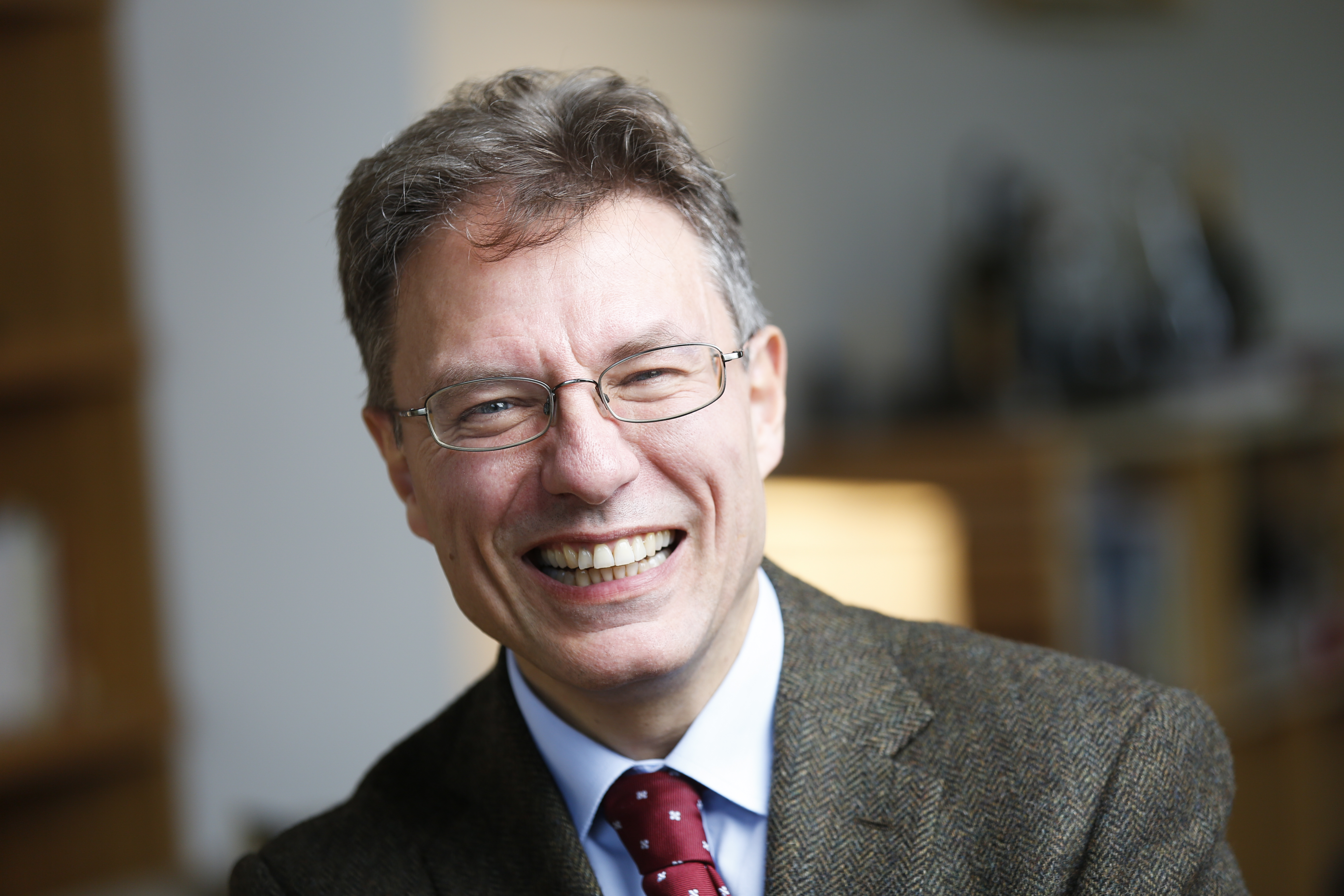
Keynote: prof. Luciano Floridi, Oxford University

Luciano Floridi 8 photo courtesy of Ian Scott 2016

For further information please contact info@cultural-entrepreneurship.de or visit https://www.cultural-entrepreneurship-institute.de


In line with VIU's mission and commitment to promote Sustainable Development  and the 17 Goals of the United Nations 2030 Agenda, this event addresses the following: 

E WEB Goal 05 E WEB Goal 09 E WEB Goal 10


This event is part of the Sustainable Development Festival 2020 promoted by ASviS
FESVIS2020ENG
Avis festival loghi partner

Feasibility Study on Methodology of Quantification of Indirect Financial Losses from Natural Disasters

Funded by The World Bank, the Feasibility Study is a research project that focuses on floods as some of the riskiest natural disasters in terms of threat to human lives and economic costs. It takes into account the evidence that flooding is getting more serious over time, in terms of frequency, strength and of the consequent damages and the loss of life that may derive, with a substantial increase in the number of flood disasters recorded in recent decades.

There is consensus that not only direct damages are important (i.e. those caused by the direct contact of human and environmental assets with flood), but also indirect ones. Indirect damages to economic activities arise as a consequence of a disaster, as a follow-on to the direct losses caused by the hazard, typically in areas that were not in direct contact with the flood water. The Study investigates direct and indirect losses from natural disaster, by measuring their economic impact and by designing a methodology to assess the tangible costs associated with high severity flood events.
To meet this objective, the Study has been divided in three phases:
i) Review of the literature to describe the state of the art of methodologies employed for assessing direct and indirect tangible costs;
ii) Design of a methodology for assessing direct and indirect tangible costs based upon previous work conducted by the consultant team;
iii) Estimate of the share of indirect economic costs as part of the total economic costs for two case studies.

The research team is coordinated by the VIU Dean Prof. Carlo Giupponi and made up of researchers from VIU, Ca’ Foscari University and the Euro-Mediterranean Center on Climate Change.
The final Report is expected for the beginning of May 2019.