t3bboxtitolomedio

Speakers' Bios

Ece Kamar

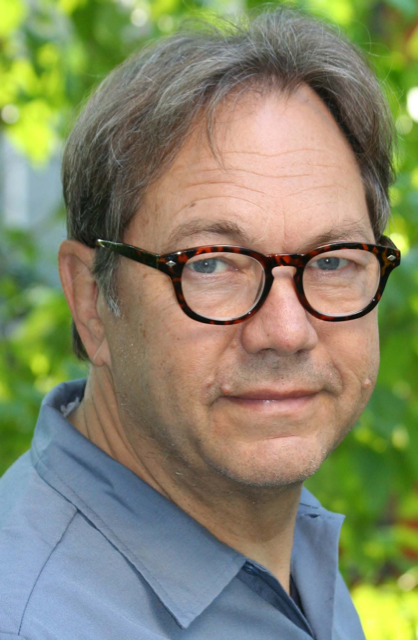
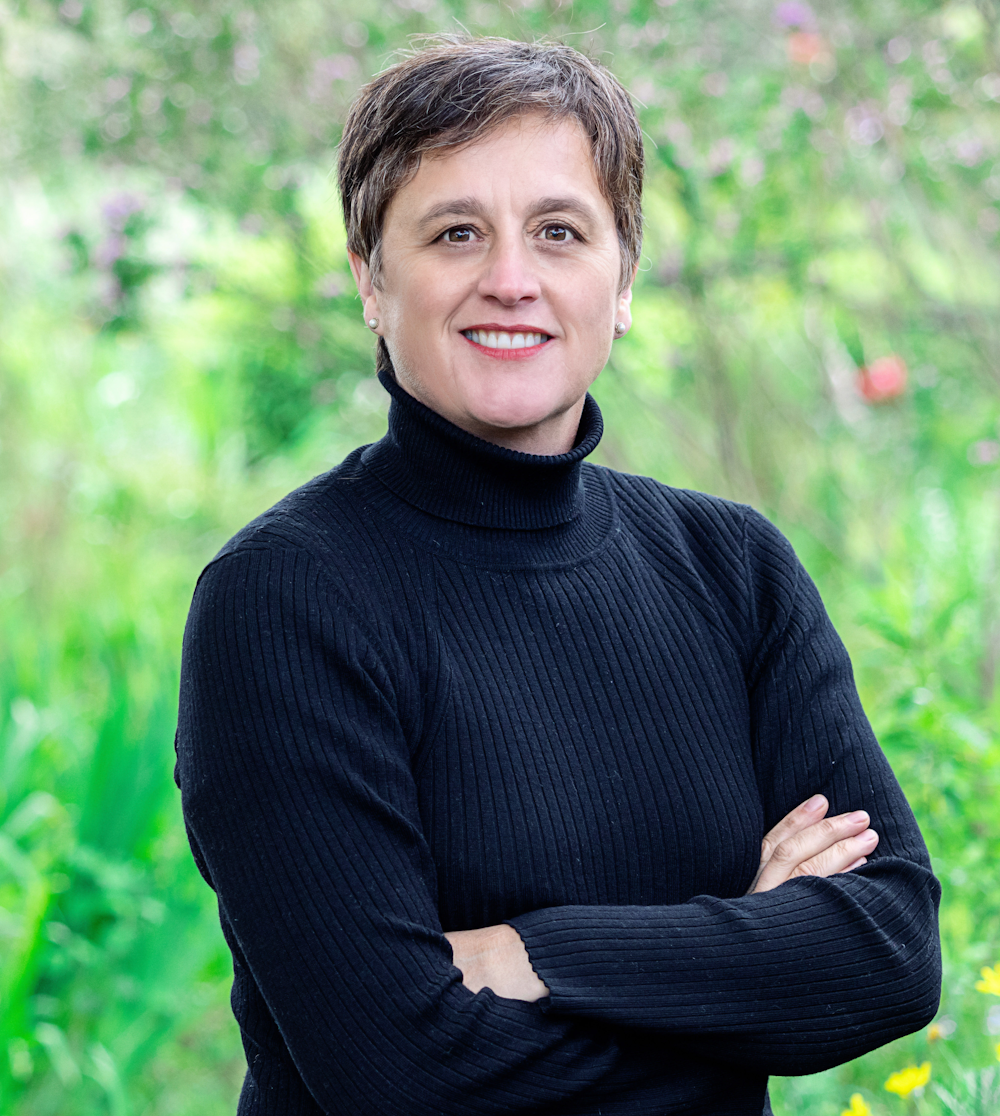
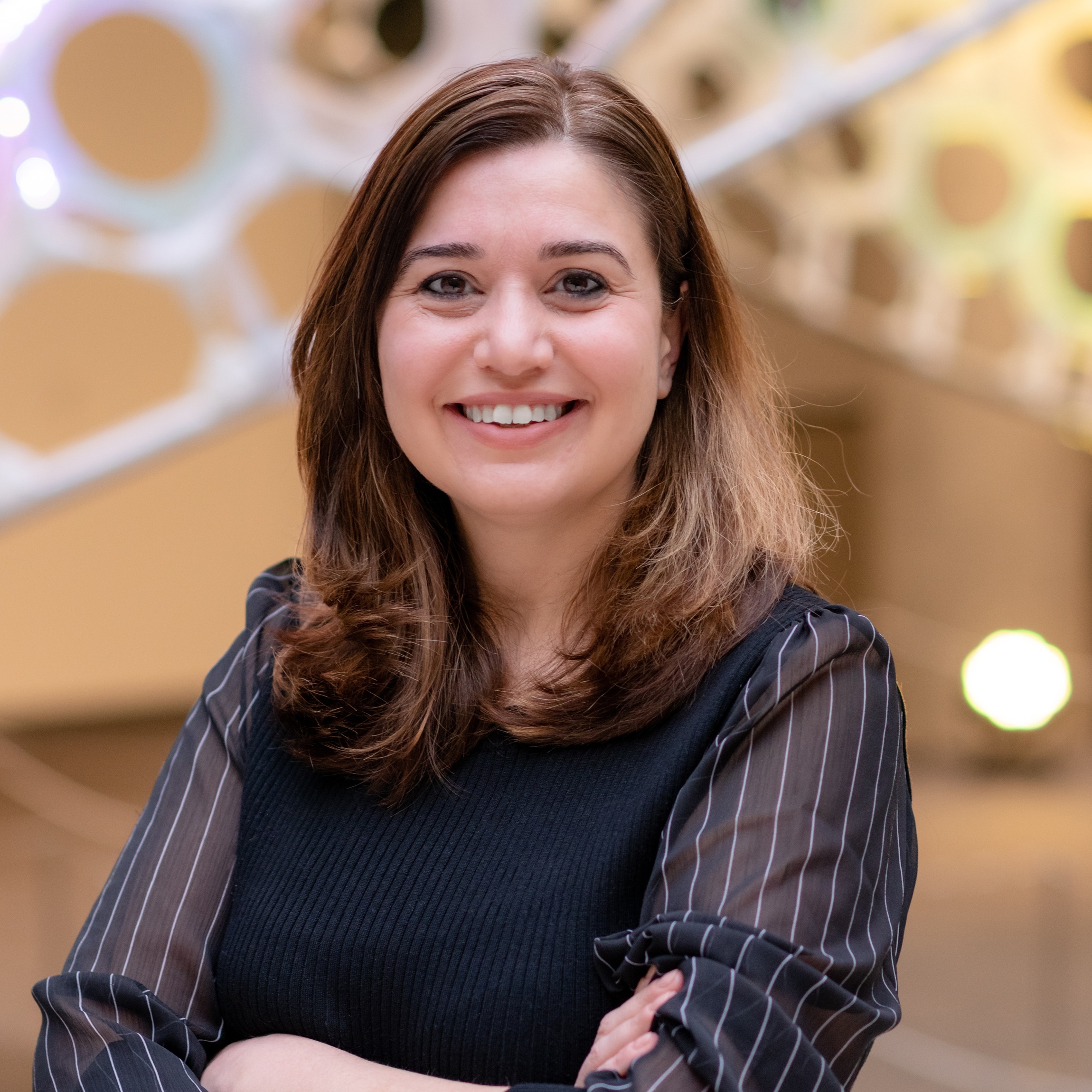
kamar ece square smallEce Kamar is Distinguished Scientist, Corporate Vice President and the Managing Director of the AI Frontiers Lab at Microsoft Research. She leads research and development towards pushing the frontiers of AI capabilities. Releases from her lab includes Phi family of models and libraries to empower agentic work, including AutoGen, MagenticOne and MagenticUI. Ece has a decade of experience studying the impact of AI on society and developing AI systems that are reliable, unbiased and trustworthy. She has been instrumental in building the Responsible AI efforts inside Microsoft. She serves as Technical Advisor for Microsoft’s Internal Committee on AI, Engineering and Ethics. Ece received a Bachelor of Science in Computer Engineering from Sabanci University in Istanbul. She completed her PhD at Harvard University, where she has worked with Prof. Barbara Grosz on human-AI collaboration. Ece is an Affiliate Faculty in the Department of Computer Science and Engineering at the University of Washington and is an Adjunct Faculty at Sabanci University. She was a member of the first study panel of Stanford’s AI100. She is currently serving on the National Academies' Computer Science and Telecommunications Board (CSTB). She has been on the organizing committees of top AI and HCI conferences and received multiple best paper awards for her work.


Luc Steels

steels wiko redLuc Steels is a pioneer of artificial intelligence research in Europe. After studies and research, first in languages and literature at the university of Antwerp and then at the MIT AI Lab in the late seventies (advisor Marvin Minsky), he returned to Europe in 1983 as professor of computer science at the Free University of Brussels (VUB). He founded the Artificial Intelligence Laboratory in 1983 and became its acting director until 2011. In 1996 he became founding director of the Sony Computer Science Laboratory in Paris. From 2011 he joined the Catalan Institute for Advanced Studies (ICREA) as research professor, associated with the Institute for Evolutionary Biology (IBE, UPF-CSIC) in Barcelona. From 2018 he started activities in Venice, first at Ca’Foscari University in the Department of Management and the European Center for Living Technologies, then at the Venice International University in Venice (Italy) until 2025. During all this time he was not only active as an AI researcher, but also as a prolific writer (Google scholar lists more than 400 papers more than 24,000 citations and an h-index of 74 and an i-index of 221). He also published a dozen edited volumes and monographs about knowledge-based AI, behavior-based robotics, artificial life, AI in education, evolutionary linguistics and computational music. In 2022, Steels received the EURAI Distinguished Service Award, highest distinction for AI in Europe.


Marina Calloni

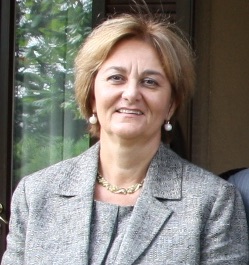
steels wiko redMarina Calloni is Full Professor and Chair of Political and Social Philosophy at the University of Milan-Bicocca. She is a member of the Board of Directors and Director of the research center ADV – Against Domestic Violence. She holds a PhD in Philosophy and a PhD in Social and Political Sciences. In 2020, she was awarded the title of Officer of the Order of Merit of the Italian Republic by the President of the Italian Republic, Sergio Mattarella. She is President of the Italian Society of Critical Theory. She worked on the archives of the Frankfurt School and was a post-doctoral researcher with Habermas in Frankfurt, as well as one of his Italian translators. She has been a guest professor at the New School for Social Research in New York and a fellow at the Italian Academy – Columbia University. She has taught at the Universities of Notre Dame, Łódź, Frankfurt a.M., Bremen, Vienna, Lugano, Hanover, and Kurume. She was a senior researcher at the Gender Institute of the London School of Economics and Political Science, directing the International Network for Research on Gender.
She served as advisor to the Parliamentary Commission of Inquiry on Femicide and All Forms of Gender Violence at the Senate of the Italian Republic. She collaborates with the Council of Europe – OCEAN (Open Council of Europe Academic Network) on the implementation of the Istanbul Convention, directing the academic network UN.I.RE.
She has led numerous national and international projects in collaboration with universities and supranational institutions (United Nations, European Commission, Council of Europe) and has lectured in over 50 countries.
She is the editor of the book series RiGenerAzioni published by Castelvecchi, and serves on the editorial boards of several national and international journals.
She has published 290 scientific works in multiple languages on topics including social philosophy, political theory, human rights and fundamental freedoms, gender issues, critical theory of society, violence, citizenship and the public sphere, research networks, and international cooperation.


Shawn McGuffey

McGuffey C Shawn bio sketch picC. Shawn McGuffey, Ph.D., is Professor of Sociology and past Director of African & African Diaspora Studies at Boston College. A native of Lexington, Kentucky, Dr. McGuffey’s professional work primarily highlights how race, gender, sexuality and social class both constrain and create the choices survivors pursue in the aftermath of trauma in the U.S. and throughout the African Diaspora. Two of his current projects focus on sexual trauma. One examines how gender, sexuality, and race shape parental responses to child sexual abuse; and the other investigates the social psychology of sexual assault survivors in the U.S., Ghana, South Africa, and Rwanda. His most recent project examines Black and feminist geographies.
Dr. McGuffey’s scholarship has been recognized by multiple academic associations. He is the recipient of four awards from three different sections of the American Sociological Association. The Society for the Study of Social Problems honored him with the Kimberlé Crenshaw Award in 2016 and in 2022 with the Arlene Kaplan Daniels Award for the best article on women and social justice. In 2022 he also received the Distinguished Publication Award from the Association for Women in Psychology. In 2023 he received the Best Article Award from the Southeastern Division of the American Association of Geographers. The Ford Foundation, Black Rape Survivors Project, a Research Incentive Grant, and the Institute for Liberal Arts have supported his research. He has given invited lectures at the Center for Children and Childhood Studies at Rutgers University, Harvard University, MIT, and the University of the Western Cape in South Africa.
He has also served on the Harassment Committee of the American Sociological Association and the Eastern Sociological Society’s Code of Conduct Committee – both charged with developing policies around various forms of harassment. In Boston he has led and served on the boards of multiple non-profits that address issues of racial justice and LGBT rights, domestic violence, and youth empowerment; and has been a contributor to Basic Black on WGBH public television.


Manfred Nowak

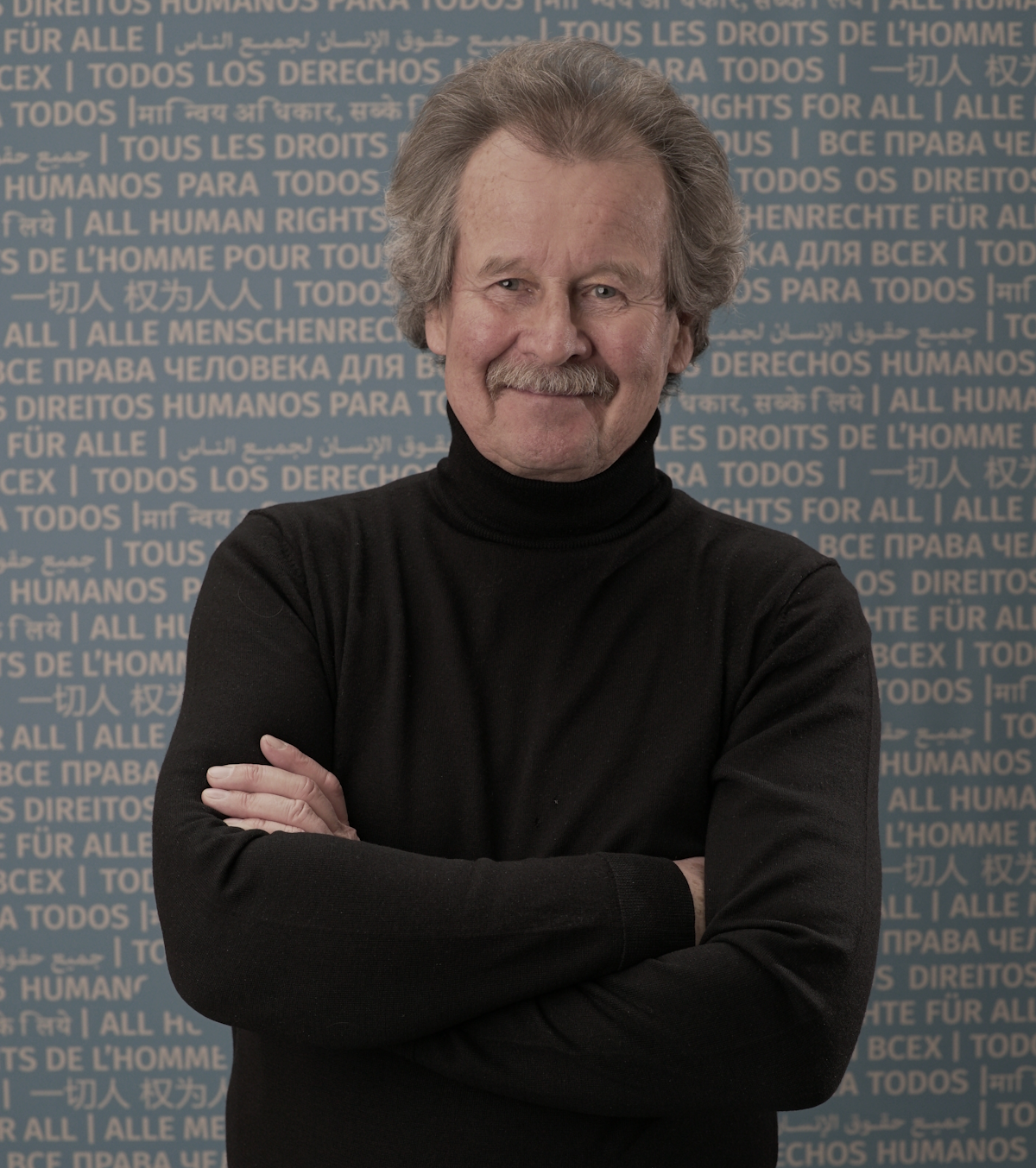
McGuffey C Shawn bio sketch picManfred Nowak is Secretary General of the Global Campus of Human Rights in Venice and Director of the Vienna Master of Arts in Applied Human Rights at the University of Applied Arts in Vienna. He previously served in various expert functions, such as UN Expert on enforced disappearances (1993-2006), UN Special Rapporteur on Torture (2004-2010), judge at the Human Rights Chamber for Bosnia and Herzegovina (1996-2003) and Vice Chairperson of the EU Fundamental Rights Agency (2013-2018). In 2016 he was appointed Independent Expert leading the UN Global Study on Children Deprived of Liberty. He was Director of the Netherlands Institute of Human Rights at Utrecht University (SIM, 1987-1989) and of the Ludwig Boltzmann Institute of Human Rights at Vienna University (BIM, 1992-2019) as well as Visiting Professor at the University of Lund (2002-2003), the Graduate Institute of International and Development Studies in Geneva (2008-2009), and at Stanford University in Palo Alto (2014). He is author of more than 600 publications in the fields of public international law and human rights.


Simone Borghesi

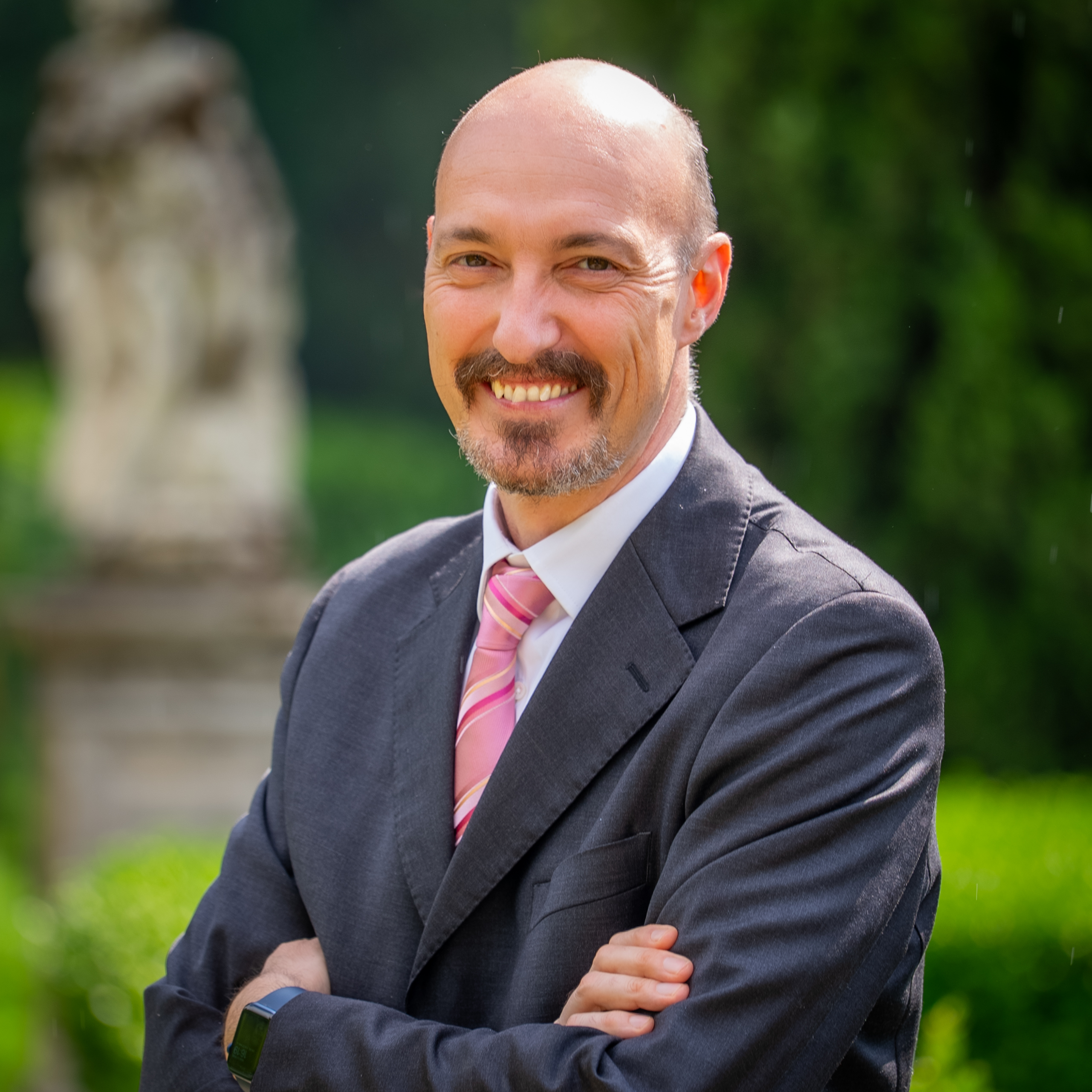
borghesiSimone Borghesi is Director of the Florence School of Regulation – Climate at the European University Institute (EUI), President of the European Association of Environmental and Resource Economists (EAERE) and Vice Rector for International Relations at the University of Siena. He has been President of the Italian Association of Environmental and Resource Economists (2018-19) and Secretary General of the Policy Outreach Committee of EAERE (2018-23). He received a M.Sc. at University College London (1996) and a Ph.D. at the European University Institute (2001). He worked at the International Monetary Fund (1998) and FEEM Milan (1999). He was visiting scholar at INRA (2013), University of Cambridge (2015), ETH Zurich (2016). He has directed several LIFE projects on Emissions Trading (SIDE, DICET, COASE) and the EUI unit in past and present Horizon projects (e.g. Innopath, Capable, Spes).
He is member of the WCEREA – World Council of Environmental and Resource Economists Associations, of the CRM Academic Advisory Council of Brookings Institution (Washington D.C.), of the Economics Advisory Council of the Environmental Defense Fund (New York) and of CEPR – Research and Policy Network on Climate Change.
His main research areas are emissions trading, European climate policies, globalisation and sustainable development, economic growth and environmental degradation, evolutionary game models.


Rika Preiser

preiserRika Preiser is Professor at the Centre for Sustainability Transitions (CST) at Stellenbosch University, South Africa, and UNESCO Co-Chair in Complexity and Transformative African Futures. Her research weaves together philosophical inquiry, complexity science, and environmental ethics to address urgent social-ecological challenges. She focuses on relational and embodied approaches to human–nature interactions, and investigates how creative, experimental methods can support regenerative change. Her work highlights the role of critical reflection and systemic imagination in fostering meaningful sustainability transformations.


Shuming Liu

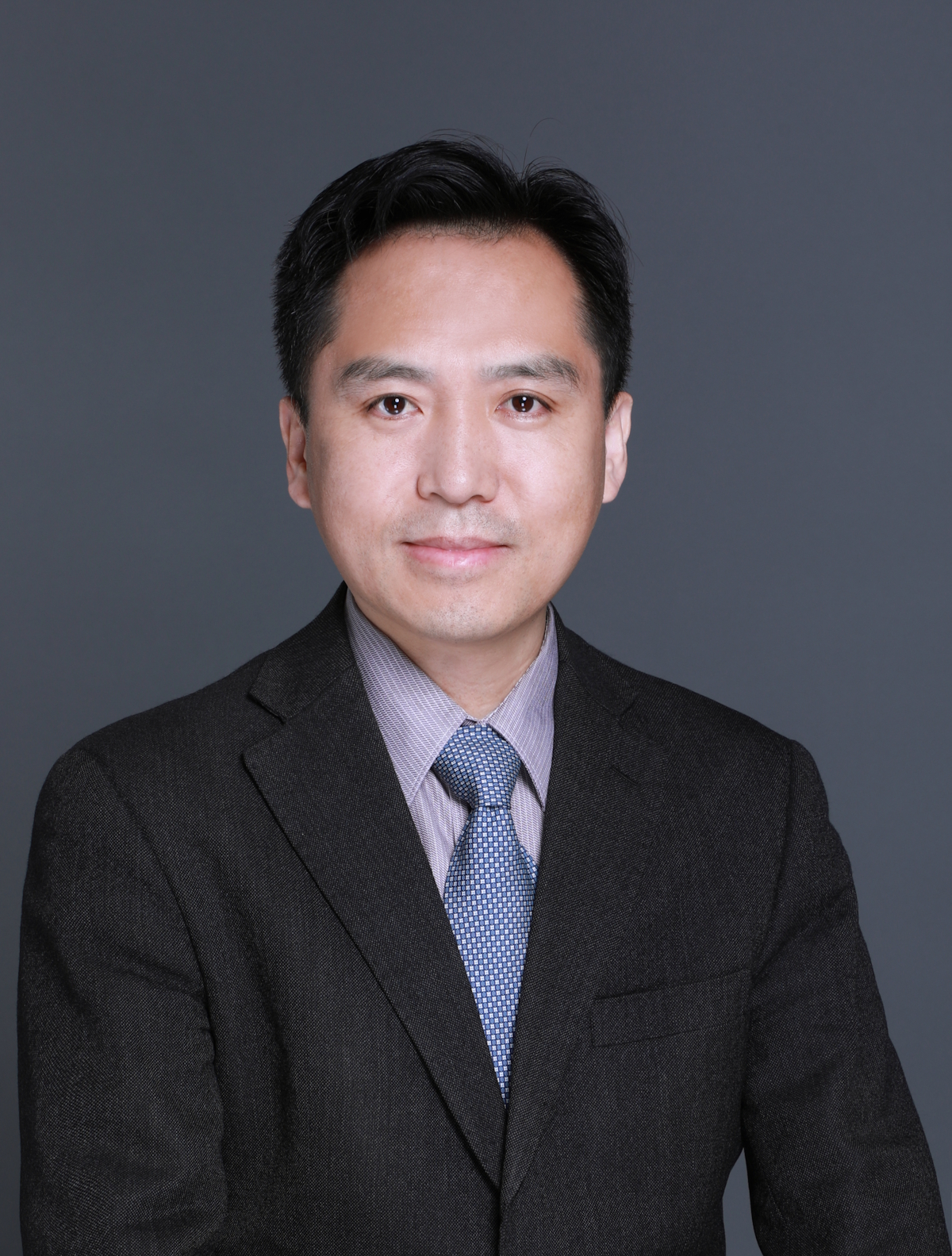
liuDean, School of Environment, Tsinghua University.
He received the Ph.D. degree from University of Paisley in 2004, and then worked as post-doc in Imperial College and Research Fellow in Exeter University. In 2007, He became an Associate Professor at Tsinghua University, and then in 2018 became Tenured Professor.
He has been teaching and doing research in the Environmental Engineering field for over 20 years. He served as Secretary General of China Water Industry Association, Editor of AQUA - Water Infrastructure, Ecosystems and Society, Secretary General of Water Treatment and Reuse Association of China, Chair of ISO/SC2, Convener of ISO/TC282/SC2/WG2 (Water Reuse for Urban Areas), Member of IWA Specialist Group on Water Loss, Committee Member of China Standardization for Water Industry.
He has strong academic background and experience in the field of urban water system, including sustainable urban water management, principle and technology of urban water supply security, resilience of urban water system, leakage control and water-energy nexus. He has been the principal scientist or scientist of national research projects in the field of water distribution and management, is familiar with the development and application of the technologies, and has the strong leadership skills and capability in project organization and management. As principal investigator (PI) and co-investigator (CI), he has led more than 30 projects. His work has helped to support different aspects of society, including drafting important national policy documents, especially on leakage control and drinking water safety. Examples include the National Guideline for Implementation of District Metering Areas (by the Ministry of Housing and Urban-Rural Development), developing water management tools in more than 20 water utilities, and support in over 100 cities in leakage control. He has authored 6 books, 70 patents, 200 academic articles, 5 ISO standards and 7 national/industry standards. He has received 7 awards, including the 2nd National Prize for Progress in Science and Technology and 1st Ministerial/Provincial Prize for Scientific and Technological Advancement.


Nicola Tollin

liuNicola Tollin is Professor with special responsibilities in Urban Resilience, Chairholder and coordinator of the UNESCO Chair on Urban Resilience at University of Southern Denmark, within the section of Civil and Architectural Engineering.
Nicola holds a MSc in architecture from University IUAV of Venice (sustainable urban development), a M.Phil. in sustainability from Technical University of Catalunya (sustainable urban development evaluation) and a Ph.D. in sustainability from Technical University of Catalunya (urban resilience transition).
Nicola worked as researcher and lecturer at University IUAV of Venice (Department of Urbanism), Technical University of Denmark (Department of Civil Engineering), Technical University of Catalunya (UNESCO Chair on Sustainability), and University of Bradford (Centre for Sustainable Environments).
He has over 20 years of international experience in research, capacity-building, education on sustainable development, resilience, climate change, circular economy and innovation focusing on cities and regions. He has coordinated/participated in over 80 research, education and urban development projects worldwide, including 13 EU funded, in several countries including Colombia, Philippines, Argentina, Chile, Mexico, Indonesia, Thailand, India, United Arab Emirates and Brazil.
He authored over 100 scientific publications, delivered over 150 speeches/presentations in 30 countries worldwide, and co-organized over 30 international conferences and official side events at UN’s conferences. He has been serving as expert for several private and public organizations, including local-authorities, European Commission and United Nations programs and agencies, such as UN-Habitat and UNFCCC.
Nicola is co-founder of Recycling Cities International Network RECNET, Executive Director of RESURBE International Program on Urban Resilience and Editor in Chief of the Resilient Cities book series published by Springer-Nature.


Spring 2018 Courses

* Link to course descriptions on each course title

Italy 

History of Venice
Luca Pes, Venice International University
S1801

Italian Contemporary History in Films
Luca Pes, Venice International University
S1802

Italian for Foreigners - beginner, intermediate, upper intermediate
Massimo Brunzin (coordinator), Venice International University
S1803

Art and Architecture in Renaissance Venice
Monica Centanni/Elisa Bastianello, Università Iuav di Venezia
S1804


Cultures of the World 

Comparing East and West: Law and Ethics
Richard Powers, Boston College
S1805

Intercultural Communication
Marcel Burger, Université de Lausanne
S1806

Gender Studies 
Luca Trappolin/Paolo Gusmeroli, Università degli Studi di Padova
S1807

What did your Grandparents do? An Intercultural Exploration of Individual Life Histories
Simon Partner, Duke University 
S1809

Port Cities in the Age of Empire
Simon Partner, Duke University 
S1810


Global Challenges 

Identity Heritage and Globalization: Social Innovation through arts, creativity and academic knowledge in Venice
Guido Borelli/Maurizio Busacca, Università Iuav di Venezia
S1811

Globalization, Ethics Welfare and Human Rights: A Focus on Migratory Crises in the Mediterranean Area
Vincenzo Romania, Università degli Studi di Padova
S1812

Global Governance for Peace and Security, Cooperation and Development 
Sara De Vido, Università Ca’ Foscari Venezia
S1813

Welfare, Equity and Public Intervention: Challenges from Global Problems
Alessio D’Amato, Università degli Studi di Roma “Tor Vergata”
S1814

Communicating Media and Politics in a Globalized World
Marcel Burger, Université de Lausanne
S1815


Environmental Management and Sustainable Development (Spring Specialization Track)

Cities, Global Change and Sustainable Development
Margherita Turvani/Matteo Basso, Università Iuav di Venezia
S1816

Globalization, Environment and Sustainable Development
Ignazio Musu/Ilda Mannino, Venice International University
S1817

Innovation and Social Changes
Yannick Lung, Université de Bordeaux
S1818

Globalization in a Changing World Economy
Yannick Lung, Université de Bordeaux
S1819

Environmental and Natural Resource Economics
Alessio D’Amato, Università degli Studi di Roma “Tor Vergata”
S1820

Introduction to Energy Politics
Irina Mironova/Maxim Titov, European University at St. Petersburg
S1821

World Oil and Gas Markets 
Irina Mironova/Maxim Titov, European University at St. Petersburg
S1822

Globalization, sustainability and resilience in the age of cities. A complexity-cognitive approach
Juval Portugali, Tel Aviv University
S1823

Space, place and environment in urban planning and design
Juval Portugali, Tel Aviv University
S1824

Climate Change and Forced Migration from an International Legal and Ethical Perspective
Richard Powers, Boston College
S1825


Spring 2019 Courses

*Link to course descriptions on each course title

Italy

History of Venice
Luca Pes, Venice International University
S1901

Italian Contemporary History in Films
Luca Pes, Venice International University
S1902

Italian for Foreigners - beginner, intermediate, upper intermediate
Massimo Brunzin (coordinator), Venice International University
S1903

Art and Architecture in Renaissance Venice
Monica Centanni / Elisa Bastianello, Università Iuav di Venezia
S1904

Immigrant Voices in Contemporary Italy
Laurie Shepard, Boston College
S1905

The Image of Italy in the English and American Novel (1860-1908)
Adrian Pinnington, Waseda University
S1906

Venice in World Literature (Fabulations)
Michele Longino, Duke University
S1907

Venice Signatures (Masks and Traces)
Michele Longino, Duke University
S1908

Music and Power: from Monteverdi to Vivaldi
Dorit Tanay, Tel Aviv University
S1909

Venice in Smartphone Video
Hun Yul Lee, Korea University
S1910


Cultures of the World

Intercultural Communication
Vincenzo Romania, Università degli Studi di Padova
S1911

Gender Studies
Sara De Vido, Università Ca’ Foscari Venezia
S1912

Gender and Kinship in the Age of Assisted Reproduction
Thomas Reinhardt, Ludwig Maximilians Universität
S1913

Comparing East and West; Legal and Political Systems and Thinking in a Globalized World
Danny Pieters, KU Leuven
S1914

Romantic Love in Japan and Europe
Adrian Pinnington, Waseda University
S1915

Fandom in Globalization
Hun Yul Lee, Korea University
S1916

(Post-)Colonial Encounters: Racism and the Making of “Africa”
Thomas Reinhardt, Ludwig-Maximilians-Universität
S1917

The Birth of the Renaissance Self
Dorit Tanay, Tel Aviv University
S1918

Literature and Business
Laurie Shepard, Boston College
S1919


Global Challenges

Identity, Heritage and Globalization: Framing the American West: The Aesthetic and Political Forms of the American West and their Global Impact
Boris Vejdovsky, Université de Lausanne
S1920

Globalization, Ethics, Welfare and Human Rights: Sustainable Social Protection in a Globalized World
Danny Pieters, KU Leuven
S1921

Global Governance for Peace and Security, Cooperation and Development. At the Roots of Cosmopolitan Constitutionalism
Claudio Corradetti, Università degli Studi di Roma “Tor Vergata”
S1922

State, Political Economy, Law and Justice. Classical Readings in Political Thought (With a Focus on Italian Contemporary Political Thought)
Claudio Corradetti, Università degli Studi di Roma “Tor Vergata”
S1923


Environmental Management and Sustainable Development (Spring Specialization Track)

Cities, Global Change and Sustainable Development
Margherita Turvani/Matteo Basso, Università Iuav di Venezia
S1924

Globalization, Environment and Sustainable Development
Ignazio Musu/Ilda Mannino, Venice International University
S1925

Economics of Environment, Natural Resources and Energy
Kirill Borisov/Yulia Vymyatnina, European University at St. Petersburg
S1926

Macroeconomics: Growth, Business Cycle, Crisis
Kirill Borisov/Yulia Vymyatnina, European University at St. Petersburg
S1927

Geomatics, 3D data Acquisition and Processing with applications on Renewable Energies, Hydro-geological Risk and Cultural Heritage
Andrea Masiero/Antonio Vettore, Università degli Studi di Padova
S1928

Introduction to Environmental Engineering
Chao Chen, Tsinghua University
S1929

Environment Risk Analysis and Emergency Response
Chao Chen, Tsinghua University
S1930

Environmental Crisis and Societal Change: Discourse, Effects, Solutions
Boris Vejdovsky, Université de Lausanne
S1931


Spring 2020 Courses

*Link to course descriptions on each course title

Italy

History of Venice
Luca Pes, Venice International University
S2001

Italian Contemporary History in Films
Luca Pes, Venice International University
S2002

Italian for Foreigners - beginner, intermediate, upper intermediate
Massimo Brunzin (coordinator), Venice International University
S2003

Art and Architecture in Renaissance Venice
Monica Centanni/Michela Maguolo, Università IUAV di Venezia
S2004


Cultures of the World

Intercultural Communication
Sabrina Marchetti/Dany Carnassale, Università Ca' Foscari
S2005

Gender Studies: Migration and Gender
Marilynn Johnson, Boston College
S2006

Comparing East and West. Political Culture
Willy Jou, Waseda University
S2007

Street Life: Urban Space and Popular Culture
Marilynn Johnson, Boston College
S2008

Orientalism and the History of India and Europe: Indian Intellectuals and their Reaction to Modernity
Maya Burger, Université de Lausanne
S2009


Global Challenges

Identity, Heritage and Globalization. Transnational Yoga; from Local to Global, Forth and Back
Maya Burger, Université de Lausanne
S2010

Globalization, Ethics, Welfare and Human Rights
Hans-Martin Schönherr-Mann, Ludwig Maximilians Universität
S2011

Global Governance for Peace and Security, Cooperation and Development
Sara De Vido, Università Ca' Foscari Venezia
S2012

A History of Credit: From Sixteenth Century Venice to Twenty-First Century New York City
Anne-Maria Makhulu, Duke University
S2013

Democratic Transition and Consolidation
Willy Jou, Waseda University
S2014

Adolescence in the Global World. Transitions, Coping and Adjustment
Moshe Israelashvili, Tel Aviv University
S2015

Globalization and Schooling Reconsidered
Moshe Israelashvili, Tel Aviv University
S2016


Environmental Management and Sustainable Development (Spring Specialization Track)

Globalization, Environment and Sustainable Development
Ignazio Musu/Ilda Mannino, Venice International University
S2017

Cities, Global Change and Sustainable Development
Margherita Turvani/Matteo Basso, Università Iuav di Venezia
S2018

African Cities, Development and Climate Change
Anne-Maria Makhulu, Duke University
S2019

Ecology and Technology as Challenges of Ethics
Hans-Martin Schönherr-Mann, Ludwig Maximilians Universität
S2020


Staff Training Week

EU Project Management Training
November 7-11, 2022

Since 2010 Venice International University and Europelago Foundation have been jointly managing the Euro-Project Training Unit at VIU which provides training in project, financial and operational management of EU-funded projects.

The training course will offer complete, up-to-date training on European project management. It will allow participants to acquire the techniques and methods that are essential for drafting and presenting projects, with the aim of increasing the competitiveness of the project proposals, and their relevance to the scope of EU calls, legislation, and regulations.


Advanced Training Course in EU Project Management
The course was originally developed in 1999 to teach project management skills to Italian companies and public authorities and increase their success in accessing European funds. It is one of the most authoritative training programmes offered in this field in Italy. Hundreds of participants have successfully completed the course over the years, including professionals both in the public sector (local and state authorities, universities, health authorities, and agencies) and in businesses, associations, training companies, social enterprises and also young people who wish gain additional skills in order to improve their employability.

In November 2022, VIU will offer a special edition of the training course to staff from member universities.

Dates: November 7-11, 2022

Fees: The program is sponsored by Venice International University and there are no program fees.

Participants will however be expected to cover the cost of their own travel, accommodation and meals.


Application deadline: September 15, 2022  (rolling admissions are continuing beyond the deadline while places are available)


Instructor: Marco Buemi

Marco Buemi is a Validated Lead Expert of the URBACT program, he worked for three years for the Swedish government and for eleven years for the Italian government as Coordinator of Indirect Funds and Project manager of European Direct Funds at the Presidency of the Council of Ministers, Department for Equal Opportunities. Since 2017 he has been following for the Metropolitan City of Bologna the Crowdfunding project within the INTERREG core program. Since 2018 he has been Project Manager for the City of Turin and Rome. Since 2019 he has been following several projects within the ENI CBC program and he is an Expert Evaluator for EU Commission for the 2021-27 period. On these issues he has a blog in L'Espresso entitled "Sustainable Objective"


Schedule

Monday, November 7

2.00 pm
Welcome and introduction to Venice International University

2.30-6.00 pm
Module 1 – Sources of information and the "map" of European funds

Topics:

Official and unofficial sources of information
Geographical rationale of all directly funded projects. EU 2021- 2027 programming
International and global challenges, and their interaction with EU scopes and programmes implementation


Tuesday, November 8 through Friday, November 11

Module 2 – Techniques and methods for drafting EU-funded projects

9.30 am - 1.00 pm Morning Session | 2.00 pm - 6.00 pm Afternoon Session

Topics:

- Preliminary processing and development of the project idea, stakeholders analysis
- Needs assessment Monitoring and selection of opportunities
- Subsidiarity and correct approach to EU calls for proposals
 - EU added value and principles of project proposal self assessment
- Project leadership, partnerships and management structure of the project
- Planning methodology, Project Cycle Management and Logical Framework – targeting the right beneficiaries
- Structuring of a project into work packages, outputs, outcomes, milestones and deliverables;
- MEAL, monitoring and evaluation of a project, how to select the right indicators – impact of the project: objectives and results
- Project forms for direct EU programmes
- Structuring and explanation of the project budget
- Project efficiency and project efficacy
- Project implementation and management; logistics and procurement
- How to communicate and disseminate a project
- Evaluation phases of projects from European Commission and external experts

Each day there will be small group exercises on practical cases and recent or current call forms.


Accommodation:

The participants can book accommodation on the San Servolo campus at the following rates:

4 nights in a single room: €240

4 nights in a double room: €190 (sharing, cost per person)

Additional nights before or after the course may be booked if requested, subject to availability.

The accommodations on San Servolo are managed by San Servolo Servizi Metropolitani. You will have the opportunity to request a pre-booking in the course application form. Once registration for the Staff Training Week closes, you will receive a link to complete your booking and payment directly with San Servolo Servizi Metropolitani.


Meals:

There are two dining options on the San Servolo Campus.

- A café that serves croissants, muffins, sandwiches, salads, hot and cold beverages.

- A restaurant that serves breakfast and lunch. Breakfast costs €8. Lunch costs €11 (reduced rate for participants of VIU activities).
A social activity will be organized during the week and will be sponsored by Venice International University.


--             

For further information:

e-mail: centro.europrogettazione@univiu.org
tel. +39.041.2719566


Student Inclusion Support

Student Inclusion Support recognizes that each student arrives at VIU with unique experiences, identities, and aspirations. Studying in an international and interdisciplinary environment such as the VIU Globalization Program can be both exciting and challenging. Student Inclusion Support is available to help students navigate these transitions and make the most of their time at VIU.

Living and learning in a new setting, adapting to different academic expectations, and interacting with people from diverse backgrounds can bring a range of emotions. Students may experience enthusiasm and curiosity alongside moments of uncertainty or stress. At VIU, we understand that these experiences can be a natural part of studying in an international context.

Student Inclusion Support is rooted in VIU’s commitment to diversity, inclusion, and belonging, empowering students to thrive both academically and personally. You can read about the experiences of Globalization Program alumni here. You can read more about diversity, inclusion and belonging at VIU here.

The learning environment and inclusion activities in the Globalization Program are designed to encourage active engagement among students and professors, creating different opportunities to learn with and from one another. Student Inclusion Support aims to ensure that all students feel supported and able to fully engage with the academic and community opportunities offered through the VIU Globalization Program.

Diversity, inclusion, and belonging are dynamic concepts shaped by our individual experiences and by the contexts in which we learn and live. To encourage reflection on these themes, students are invited to take part in a supplementary reflection exercise on diversity, inclusion and belonging at VIU. This exercise supports personal reflection while contributing to the co-creation of a campus culture that cultivates dialogue, mutual respect, and thoughtful engagement. The reflection exercise is available to all students in the VIU e-learning platform.

How to Contact Student Inclusion Support

VIU staff are available to provide guidance and support throughout the Globalization Program. In addition to talking to your professors and the Vice-Dean and Director of the Globalization Program, Prof. Luca Pes, students can also reach out to Diana Mattiello, Student Inclusion Support, Office 5Y, to talk about their experiences in a confidential and supportive space, whether related to academic participation, adjusting to campus life, raising awareness and outreach initiatives, or simply navigating the transition to a new environment.

Diana Mattiello
Student Inclusion Support

tel. +39 041 2719578 
email: diana.mattiello@univiu.org


Summer Institute on Ageing

June 5-10, 2017
Global Ageing, Vulnerability and Disability

The VIU Summer Institute on Ageing offers a “state-of-the-art” program which will provide the students with a thorough understanding of the ageing process, ranging from recent advances of the medical and epidemiological literature, to an extensive treatment of the economic dimension (pensions and long term care) and of the sociological dimensions (intergenerational transfers, role of family networks). Special attention will be given to the use of large micro-data sets, such as SHARE (Survey of Health Ageing and Retirement in Europe) and sister surveys: the HRS, ELSA, TILDA, CHARLS

Introduction
The VIU Summer Institute on ageing will: provide students and trainees with a thorough understanding of the ageing process, offering notions of the medical and epidemiological recent literature to the socio-economic advances in this research area enhance the multidisciplinary approach for researchers who work on ageing provide “hands on” experience on the micro data-sets increase the mobility and the inter-connectivity of PhD students, researchers, teaching staff and policy makers, hence favouring the creation of research networks

Learning outcomes
participants will gain special insight into the recent advances of the ageing process from a theoretical and practical point of view and will be able to perform impact evaluation (e.g. health care costs); participants will learn how to use the data in this area of research participants will be offered the opportunity to share their ideas in a poster-sessions and during social events participants will develop transversal competences based on a multidisciplinary approach. Specific training sessions, such as “revolving conversations”, will take place. policy makers and people involved in public policy and public services will be able to learn how to connect issues between the health dimension of ageing and the socio-economic dimension of ageing.

Who can apply
The Summer Institute is addressed mainly to graduate and PhD students in social sciences (economics, sociology, demography, political science), to MDs particularly geriatrics, students in epidemiology, public health. Moreover, policy makers and high-level officials in public and private institutions will be admitted if their background is adequate

Program structure
The Summer Institute will consist of three blocks of activities

- Morning lectures from leading researchers addressing the most recent advances in the area. Presentations in the fields of biomedicine, geriatrics, genetics, epidemiology, patient care, psychiatry, as well as economics of ageing, pension economics and finance, health economics, public health, demography and sociology.
- Hands on sessions in the afternoon. Provide students a thorough presentation of the survey data on ageing available to the scientific community. The 2017 VIU-Summer Institute will focus on datasets such as SHARE, ELSA, TILDA, CHARLS.
- Poster sessions and revolving conversations Students are invited to prepare a poster about their ongoing research: a paper they are working on or other preliminary work. Poster sessions will be held typically around lunch-time: students will have the opportunity to discuss their own research with the senior scholars. Studentswill be askedto take part to dedicated interactive sessions, such as “revolving conversations”, aimed at discussing new research ideas.

Tuition fees
Tuition fees are € 1,000 including VAT. The tuition fee covers also accommodation (double rooms) and meals expenditures arranged by VIU. Candidates can request a grant in order to support tuition expenses.

The Summer School is co-organized by Venice International University, Consiglio Nazionale delle Ricerche, Università Ca' Foscari Venezia, Université de Lausanne, Università degli Studi di Padova, Università di Roma Tor Vergata.

Duration June 5 - 10, 2017
Applications deadline: April 30, 2017
Location San Servolo Island, Venice, Italy

Contact and info:
Tea Stifanic
Tel: (+39) 041 2719511
Email: ageing@univiu.org

Summer Institute on Ageing

Mental and Physical Disability

June 3-7, 2019 (7th edition)

Extended deadline: April 15th 2019


VIU Scientific Coordinator: Agar Brugiavini, Ca’ Foscari University of Venice & VIU

In 2019 the Summer Institute on Ageing will reach its 7th edition. The Summer Institute provides students and early-career researchers with a multidisciplinary and rigorous understanding of the ageing process, ranging from some basic notions of the medical and epidemiological literature, to an extensive treatment of economics (pensions and retirement, ageing in society and intergenerational relationships) and of the sociological dimensions (intergenerational transfers, role of family networks).
A special focus is the use of large micro-data sets, such as SHARE (Survey of Health Ageing and Retirement in Europe) and sister surveys (HRS, ELSA, CHARLS)


Organising Committee: Agar Brugiavini, Stefania Maggi, Jürgen Maurer, Giacomo Pasini, Guglielmo Weber.

Contributing member universities:
• Ca’ Foscari University of Venice
• National Research Council of Italy
• University of Lausanne
• University of Padua

The following scientists and researchers will contribute to 2019 Summer Institute on Ageing:

James Banks, Manchester University, UK
Luigi Ferrucci, National Institutes on Aging (NIA), USA
Howard Litwin, Hebrew University of Jerusalem, IL
Pierluigi Nicotera, German Center for Neurodegenerative Diseases (DZNE), DE
Stefania Maggi, Institute of Neuroscience, National Research Council of Italy, IT
Jürgen Maurer, University of Lausanne, CH
Jean-Pierre Michel, University of Geneva, CH
Giacomo Pasini, Ca’ Foscari University of Venice, IT
Guglielmo Weber, University of Padua, IT
Stephanie Stuck, Munich Center for the Economics of Aging (MEA), DE
Anja Leist, University of Luxemburg, L
Maarten Lindeboom, Free University of Amsterdam, NL


Which are the main activities?

• Presentations in the fields of biomedicine, geriatrics, genetics, epidemiology, patient care, psychiatry, as well as economics of ageing, pension economics and finance, health economics, public health, demography and sociology;
• Hands-on sessions: presentation of the survey data on ageing available to the scientific community focusing on datasets such as SHARE;
• Poster sessions and other activities: discussing the participants’ research with the senior scholars;
• Interactive sessions, such as “tutoring sessions”, aimed at giving participants the opportunity to discuss their own research ideas with senior speakers in individual or small group meetings.

What’s special about the Institute?

Attending the school means developing transversal competences because the approach is multidisciplinary, and those who have a specific economic or sociological background will know more about medical advances in ageing research, learning the specific language in which MDs deal with these issues as well.
High-level policy makers or officials who may also take part in this programme will be able to learn how to connect issues between the health dimension of ageing and the economic dimension of ageing.

Learning Outcomes

Double learning outcomes: on one hand, participants will gain more insight into the recent advances of the ageing process from a theoretical and practical point of views, and will be able to evaluate the impact of these advances (e.g. health care costs); on the other hand participants will take part into a “hands-on” session that will teach them how to use the data behind the research effort in this area. Hence participants will gain both subject-related competence in handling large data sets on ageing, which do contain relevant information on health conditions, but also economic conditions. Finally, participants will be able to develop models which can predict the relevance of policies, such as reforms in the Long Term care dimension.

Who can apply?

Graduates, PhD students and post-doc scholars in economics, statistics, social sciences and medicine, but also to professionals in the pharmaceutical and ageing care industries.

What’s the relevance of the school?

Ageing population is a major concern for many European countries. The ageing process is a complex process involving several dimensions, from the health dimension to the socio-economic context. In order to achieve a better understanding of how to guarantee successful ageing in Europe, it is crucial to take account jointly of these different dimensions, and to develop welfare models that enhance the resource aspect of an ageing population: from labour supply (experience), to family care, etc.
Future generations of researchers will have to address the challenge of ageing with a multidisciplinary background, both in their academic career and in operational activities, and policy making as well. This is true also for firms (and managers) which will have to adjust to an ageing work-force and to make the best of the skills that these workers will offer. It is clear that this research agenda has a huge impact on public finances, ranging from Health care and Long term care spending, to Pensions and Social Security.

ECTS equivalence: 2


Bios of Lead Professors

Agar Brugiavini is full professor of Economics at Ca’ Foscari University of Venice. She has investigated the behaviour of individuals and household both in the area of consumption and saving and in the area of labour supply. In particular, she is interested in the effects of pension reforms on household’s saving decisions, in retirement choices and in the insurance aspects of pension arrangements. More recently she has looked at the relationship between health conditions and economic behaviour.

Stefania Maggi is Senior Researcher at the National Research Council of Italy, Aging Section-Institute of Neuroscience. She holds a Degree of Doctor in Medicine and Surgery at the School of Medicine, University of Padua, Italy, a Master in Public Health - Department of Epidemiology, The Johns Hopkins University School of Hygiene and Public Health, Baltimore, Maryland, and a PhD in Pathophysiology School of Medicine, University of Padua, Italy. She is author of about 170 publications in peer-reviewed national and international journals.

Juergen Maurer is Director of the Institute of Economics and Management of Healthcare at the University of Lausanne. He holds a Ph.D. in Economics from the European University Institute in Florence, Italy. He is a fellow of the Center for Economics and Social Research (CESR) at the University of Southern California in Los Angeles, a senior fellow of the Munich Center for the Economics of Aging (MEA), an external affiliate of the Health, Econometrics and Data Group (HEDG) of the Centre for Health Economics at the University of York in the UK, an adjunct economist at the RAND Corporation and an adjunct lecturer at the Institute for Global Health of the University of Geneva. His research work mainly focuses on aging, health disparities and public health.

Giacomo Pasini is Associate Professor at Ca’ Foscari University of Venice, Department of Economics, affiliated to Netspar, director of the PhD in Economics at Ca’ Foscari University of Venice and Rector's delegate for Cooperation and development. His research interest mainly focus on Health and Ageing Economics; Labor Economics; Household Finance.

Guglielmo Weber is full professor of Econometrics at University of Padua. He is also International Research Associate at the IFS (London), Research Fellow at the CEPR (London), Italian Country Team Leader for SHARE and deputy managing director of SHARE-ERIC. His research interests mainly focus on consumption, savings and the economics of ageing.


Applications procedure and costs

Application via VIU website, now available

Extended deadline: April 15th 2019


Application fees:

Full fee: € 600 incl. VAT
Applicants from VIU member universities: € 200 incl. VAT


Scholarships may be available to cover part of the fee.

The fees will cover tuition, course materials, accommodation in shared rooms at the VIU campus, lunches in the VIU cafeteria and social events.


EICA logo

Contact and info:
Mariagiulia Bertolini
Tel: (+39) 041 2719511
Email: ageing@univiu.org
Summer Institute on Ageing 2018

Gender Issues in an Ageing Society

June 4-9, 2018

The VIU Summer Institute on Ageing offers a “state-of-the-art” program which will provide the students with a thorough understanding of the ageing process, ranging from recent advances of the medical and epidemiological literature, to an extensive treatment of the economic dimension (pensions and long term care) and of the sociological dimensions (intergenerational transfers, role of family networks). Special attention will be given to the use of large micro-data sets, such as SHARE (Survey of Health Ageing and Retirement in Europe) and sister surveys.
This edition of the Summer Institute will have a focus on Ageing and Gender. The last three days will be organized in collaboration with the COST action IS1409, focusing on “Gender implications of extending working lives”, with common sessions on June 7-8 and an optional COST session on June 9.

Introduction

The VIU Summer Institute on Ageing will:
- provide students and trainees with a thorough understanding of the ageing process, offering notions of the medical and epidemiological recent literature to the socio-economic advances in this research area
- enhance the multidisciplinary approach for researchers who work on ageing
- provide “hands-on” experience on the micro data-sets
- increase the mobility and the inter-connectivity of PhD students, researchers, teaching staff and policy makers, hence favouring the creation of research networks.

Faculty

Scientific Coordinator: Agar Brugiavini, Ca’ Foscari University of Venice

Other professors and university affiliation:

Vincenzo Atella, Università degli Studi di Roma Tor Vergata
Mauricio Avendano, King’s College London, UK 
Axel Börsch-Supan, Max Planck Institute for Social Law and Social Policy, D
Fiona Carmichael, University of Birmingham, UK
Amitabh Chandra, Harvard Kennedy School, USA 
Luigi Ferrucci, National Institutes on Aging (NIA), USA
Doriano Lamba, Istituo di Cristallografia, DSCTM-CNR Trieste, IT
Nicky Le Feuvre, Université de Lausanne, CH
Stefania Maggi, Institute of Neuroscience, National Research Council of Italy
Jürgen Maurer, University of Lausanne, CH
Jean-Pierre Michel, University of Geneva, CH
Giacomo Pasini, Ca’ Foscari University of Venice, IT
Jonathan Skinner, Dartmouth College, USA
Morten Wahrendorf, Heinrich-Heine-Universität Düsseldorf, D
Guglielmo Weber, Università di Padova, IT

Tutors: 
Cristina Orso, Ca’ Foscari University of Venice, IT
Monika Ozkovska, Cenea - Center for Economic Analysis, PL

Learning outcomes

Participants will gain special insight into the recent advances of the ageing process from a theoretical and practical point of view and will be able to perform impact evaluation (e.g. health care costs); participants will learn how to use the data in this area of research participants will be offered the opportunity to share their ideas in a poster-sessions and during social events participants will develop transversal competences based on a multidisciplinary approach. Specific training sessions, such as “revolving conversations”, will take place. policy makers and people involved in public policy and public services will be able to learn how to connect issues between the health dimension of ageing and the socio-economic dimension of ageing.

Who can apply 

The Summer Institute is addressed mainly to graduate and PhD students in social sciences (economics, sociology, demography, political science), to MDs particularly geriatrics, students in epidemiology, public health. Researchers involved in the COST network are particularly welcome. Moreover, policy makers and high-level officials in public and private institutions will be admitted if their background is adequate.

Program structure

The Summer Institute will consist of three blocks of activities: 
- Morning lectures from leading researchers addressing the most recent advances in the area. Presentations in the fields of biomedicine, geriatrics, genetics, epidemiology, patient care, psychiatry, as well as economics of ageing, pension economics and finance, health economics, public health, demography and sociology. 
- Hands-on sessions in the afternoon. Provide students a thorough presentation of the survey data on ageing available to the scientific community, focusing on datasets such as SHARE. 
- Poster sessions and revolving conversations. Students are invited to prepare a poster about their ongoing research: a paper they are working on or other preliminary work. Poster sessions will be held typically around lunch-time: students will have the opportunity to discuss their own research with the senior scholars.
- Interactive sessions, such as “tutoring sessions”, aimed at giving participants the opportunity to discuss their own research ideas with senior speakers in individual or small group meetings.

Number of ECTS credits allocated: 2
A Certificate of attendance will be issued at the end of the course.

Training period options

  • Only summer institute on Ageing: June 4-8
  • Summer institute on Ageing + full COST training school: June 4-9
  • Only COST training school: June 7-9 (for this option, application via COST TS website)

Applications procedure and costs

Application via VIU website, now available
Rolling admissions until April 29, 2018 (deadline extended)

Application fee: 800€ incl. VAT.
The fees will cover tuition, course materials, accommodation in shared rooms at the VIU campus, lunches in the VIU cafeteria and social events.
Scholarships will be available to cover part of the fee.

Successful applicants who apply before April 15, 2018 (extended) will be able to book accommodation on campus.
Applicants who apply after that date will organize their own accommodation.

Co-organizers and partners

Venice International University
EICA – European Interdisciplinary Council on Ageing
Consiglio Nazionale delle Ricerche
Università Ca' Foscari Venezia
Université de Lausanne
Università degli Studi di Padova
Università di Roma Tor Vergata
COST action IS1409

EICA logoCOST logo

Contact and info:
Hélène Duci
Tel: (+39) 041 2719511
Email: ageing@univiu.org

Summer School in Oriental Languages

6-15 July 2017

In collaboration with: Université de Lausanne, Université de Liège, Université Laval, Università Ca’ Foscari Venezia

Scientific Coordinator: 
Prof. Dr. David Hamidovic, University of Lausanne (Switzerland)

In cooperation with: 
Prof. Dr. Georges Bohas, Ecole Normale Supérieure de Lyon (France)
Prof. Dr. Laurent Colonna d’Istria, University of Liege (Belgium)

The intensive program offered by the Summer School in Oriental Languages (ÜLO) intends to train students from different nationalities in ancient and modern oriental languages (Akkadian, Classical Hebrew, Modern Hebrew, Aramaic, classical Arabic, modern Arabic, old Persian, Persian, Armenian, Georgian, Coptic, classical Ethiopian, Syriac, Old Church Slavonic). While it is often difficult to open courses in rare languages at every university, the ÜLO allows the grouping of a sufficient number of students for the opening of such courses.

The professors are university lecturers and researchers. During the program, they also take the opportunity to exchange on common objects of research that have a tangible form, either in projects, or in common databases. The intensive program is therefore a chance for the professors to share knowledge and to work outside the classrooms as well as during the lessons.

Each institution has developed learning methods for languages, including learning methods in language and communication proficiency as well as competencies in translation studies, depending on their institutional projects. Innovative practices are identifiable. Databases, learning methods as well as original pedagogies are implemented in this context.

Applications:
https://www.unil.ch/ftsr/fr/home/menuinst/enseignement/universite-dete.html 

Summer School in Oriental Languages

July 5-14, 2018

Scientific Coordinator: 
Prof. Dr. David Hamidovic, University of Lausanne (Switzerland)

In collaboration with: Università Ca’ Foscari Venezia (Italy)


Level of students and suitable fields of study
Students in BA, MA, PhD in Linguistics, Humanities, Sciences of Religions, Theology, Social Sciences. The summer school proposes different levels of languages according to the student’s skills.
Please note that courses are given in French, but teachers will be able to communicate in English with non-francophones.

Application via UNIL website 

Only courses with a minimum number of confirmed participants will open. This explains why each person registered is asked to pay the registration fees right away, in order to confirm his or her will to participate in the summer school.

When you subscribe, you may indicate up to three choices of courses. If there is insufficient enrollments for your first choice to open, you will automatically be register for your second choice, and informed about it.
Courses will open on a rolling basis. Each person registered will be informed as soon as the course he or she chose opened, and at the latest, by 30 April, 2018.


Course description
The intensive program offered by the Summer School in Oriental Languages (ÜLO) intends to train students from different nationalities in ancient and modern oriental languages (Akkadian, Classical Hebrew, Modern Hebrew, Aramaic, classical Arabic, modern Arabic, old Persian, Persian, Armenian, Georgian, Coptic, classical Ethiopian, Syriac, Old Church Slavonic). While it is often difficult to open courses in rare languages at every university, the ÜLO allows the grouping of a sufficient number of students for the opening of such courses.

The professors are university lecturers and researchers. During the program, they also take the opportunity to exchange on common objects of research that have a tangible form, either in projects, or in common databases. The intensive program is therefore a chance for the professors to share knowledge and to work outside the classrooms as well as during the lessons. The intensive program also intends to integrate into those projects the students that were trained during the courses of the Summer School.

Each institution has developed learning methods for languages, including learning methods in language and communication proficiency as well as competencies in translation studies, depending on their institutional projects. Innovative practices are identifiable. Transfers between institutions through the intensive program is therefore expected. Databases, learning methods as well as original pedagogies are implemented in this context.

Learning outcomes and program structure
A ten consecutive day session with two lessons of selectable languages (a major one for 5 hours a day, and a minor for 2 hours a day) for students, depending on their personal and/or professional project. 
In the evening, conferences will be proposed on research subjects or on publications of professors or advanced students. 
Knowledge, capacities and competencies of the students are developed through lessons, seminars, and through the use of standard information and communication technologies.
1.    Development of competencies for students
2.    Trainings of students in rare languages
3.    Intensification of scientific and pedagogical exchanges between partner institutions.

Credits
6 ECTS (76 hours for the major and minor courses, daily study after the courses, 2 evaluations during the session).

Further information about Faculty, Courses, Program structure, Fees and Accommodation available on the UNIL website:

https://wp.unil.ch/summerschools/courses/langues-de-lorient/

Contacts:

summerschools@unil.ch