Opening Ceremony of Spring 2015 term

opening banner home Spring 2015


GLOBALIZATION PROGRAM
Thursday, 19 February 2015
at 10.30am, Aula Magna


Opening Remarks


Amb. Umberto Vattani
President


Prof. Agar Brugiavini
Dean


Honored Guest
Professor Paul Ekins
Director, Professor of Resources and Environmental Policy
UCL Institute for Sustainable Resources


Lectio Magistralis
2015: a Critical Year for Energy and Climate Policy

pdf download the full presentation


Welcome reception
______________________________


Paul Ekins is Director of the UCL Institute for Sustainable Resources, University College London where he also teaches Resources and Environmental Policy.
Paul Ekins' academic work focuses on the conditions and policies for achieving an environmentally sustainable economy, covering a number of areas of energy-environment-economy (E3) interaction and environmental policy, including: sustainable development assessment methodologies; resource productivity; sustainable energy use; E3 modeling and scenarios; the adjustment of national accounts to take account of environmental impacts; environmental economic instruments and ecological tax reform; sustainable consumption; and environment and trade.
He is also Deputy Director of the UK Energy Research Centre, a member of UNEP'S International Resource Panel; a Fellow of the Energy Institute; a Senior Consultant to Cambridge Econometrics; a Co-Director of the UK Energy Research Centre, in charge of its Energy Systems and Modelling theme; and he leads UCL’s participation in the EPSRC SUPERGEN consortium on hydrogen fuel cells and on bioenergy research.

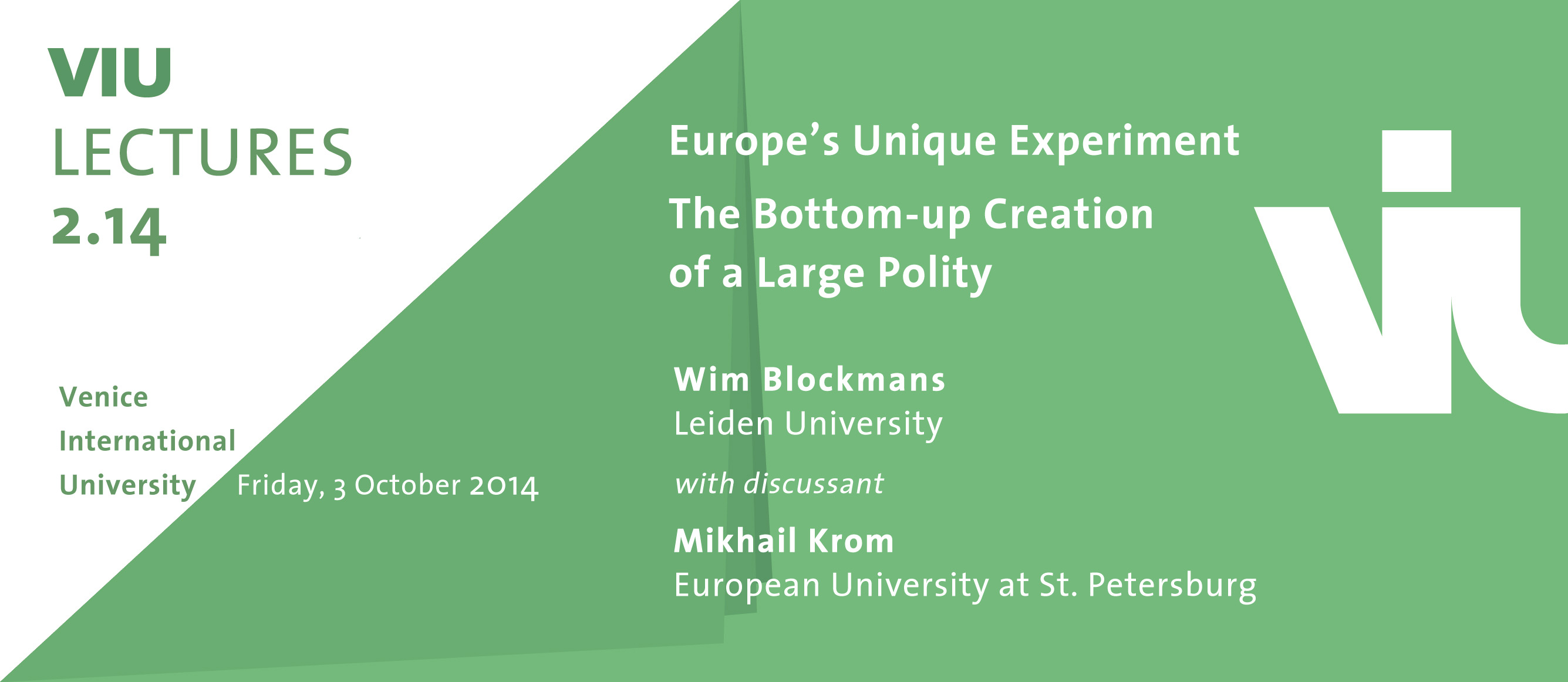
VIULECTURES 2|14: Europe's Unique Experiment, 3 October 2014

Venice International University inaugurates the series of the VIULECTURES 2|14, a cycle of three appointments open to the public, as part of VIU Fall 2014 term academic offer.


First meeting:


VIULECTURES-banner - 1 


Friday, October 3, at 10 am
San Servolo island, Venice - room 9A


Europe’s Unique Experiment: The Bottom-up Creation of a Large Polity
Guest Speaker: Prof. Wim Blockmans
discussant: Prof. Mikhail Krom


This lecture forms a part of Prof. Krom’s course on Comparative History and on Early Modern State Building: a Comparative Perspective.


VIULECTURES 2|14

Monday, 1 December 2014
5 pm, room 1 G


The Quality of Mercy. A Reflection on 30 Years of Humanitarian Work and International Cooperation


Guest speaker: Filippo Grandi, Italian diplomat and United Nations official


Filippo Grandi is an Italian diplomat who has served in Iraq, the Congo, Afghanistan, the Middle East and other humanitarian frontlines, engaging in refugee and humanitarian work over the past 26 years, 22 of which have been with the United Nations, encompassing refugee assistance, protection, emergency management, donor relations and humanitarian and political affairs. Filippo Grandi served as Commissioner-General of the United Nations Relief and Works Agency for Palestine refugees from January 2010 to March 2014, after having served as UNRWA’s Deputy Commissioner-General since October 2005.


About UNRWA: UNRWA provides assistance, protection and advocacy for some 4.7 million registered Palestine refugees in Jordan, Lebanon, Syria and the occupied Palestinian territory, pending a solution to their plight. The Agency’s services encompass education, health care, a social safety-net, camp infrastructure and improvement, community support, microfinance and emergency response, including in times of armed conflict.


This open lecture is organized in association with Collegio Internazionale Ca’ Foscari.


__________________________________________________________________________


Wednesday, 12 November 2014
5 pm, room 9 A


Symbolic Violence: Reshaping Post-Patriarchal Discourses on Gender


In this Lecture, Franca Bimbi will present and discuss her study Symbolic Violence: Reshaping Post-Patriarchal Discourses on Gender*.
Gender dualism seen through the lens of symbolic violence is both an appearance and a structural field within the dynamics of domination: patriarchal patterns continue to exist in “gender regimes”, where women’s self-determination is recognized as a normative frame. As regards the emphasis on interpretative dualism in migrant and native women’s victimization, Franca Bimbi will specifically examine the encounter between Bourdieu’s view of male domination and classical feminist constructs as lived body experience, sexual contract, and trafficking in women. This is to highlight the many “gazes” which can reveal the illusio of universal gender rights and the neo-colonial discourse on migrant women.


This open lecture forms a part of Prof. Trappolin’s course at VIU on Gender Studies.


* Recently published in the journal Advances in Gender Research (vol. 18B, 2014, pages 275-301).


Franca Bimbi is full professor of Sociology at Padova University, where she teaches General Sociology and Social Policy and leads a research group at  the Department FISPPA (Philosophy, Sociology, Education and Applied Psychology). Besides collaborating with local, national and European political committees, she is coordinator for European projects on violence against women, migration, family and urban life security. Her current interests mainly focus on "Gender, Citizenship, Pluralism identity" and in particular on the cultural processes of transformation of family relationships.


Luca Trappolin is assistant professor of Sociology at the Department of Philosophy, Sociology, Education and Applied Psychology (FISPPA) of the University of Padua. He is a member of the University Forum on Gender Politics and Studies, and directs the section on Queer Studies. He is also member of editorial boards of online and printed publication series on Gender Studies. His research topics focus on: transformation of gender and sexual identities, social construction of the body, conflicts related to recognition, and the public sphere.


__________________________________________________________________________


Friday, 3 October 2014

10 am, room 9 A


Europe’s Unique Experiment: The Bottom-up Creation of a Large Polity


To celebrate the thirtieth anniversary of the research program The Origins of the Modern State in Europe, 13th-18th Centuries, conducted by Prof. Jean-Philippe Genet of Université Paris-Sorbonne, Prof. Mikhail Krom from the European University at St. Petersburg invites the emeritus professor Wim Blockmans to illustrate the new and compelling challenges regarding Europe’s role and its legacy concerning individual states at present.


What are the origins of this challenge, and to what degree does it constitute an obstacle to Europe’s role in a globalizing world?
Starting from a far-reaching historical analysis of the various forms European states have taken in the course of centuries, the lecture “Europe’s Unique Experiment: The Bottom-up Creation of a Large Polity” seeks to provide a better understanding of the tension between the traditional longing to belong and the ongoing globalization world-wide.


This open lecture forms a part of Prof. Krom’s course on Comparative History and Early Modern State Building: a Comparative Perspective.


VIUlecture abstract
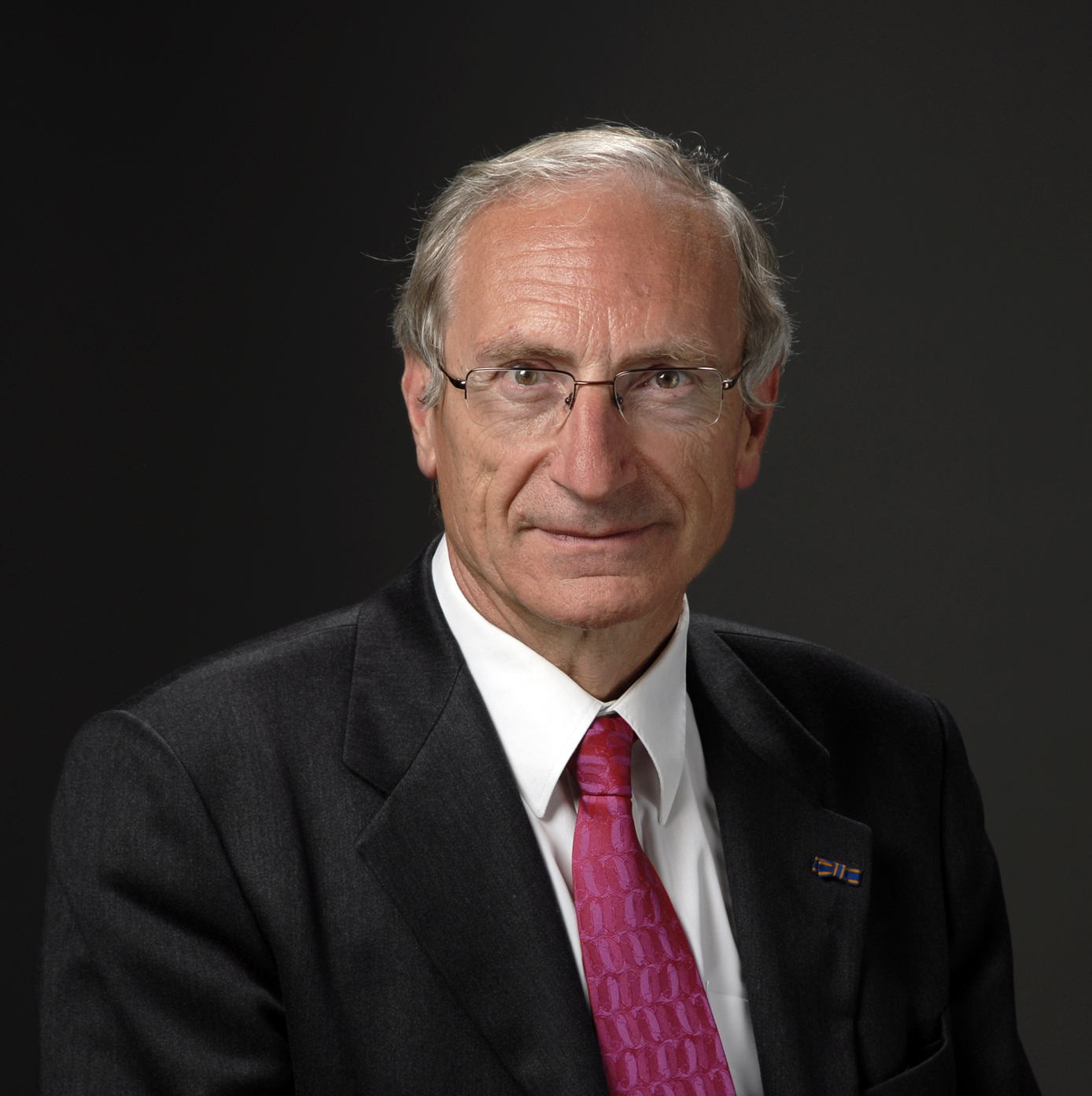

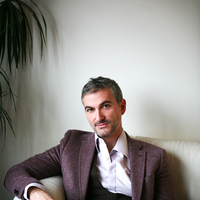
blockmans0063 Wim Blockmans is Professor Emeritus at Leiden University. Prof. Blockmans has taught social and political history at Erasmus University, Rotterdam and medieval history at Leiden University. In 2002 – 2010 he was Rector of Netherlands Institute for Advanced Studies in the Humanities and Social Sciences in Wassenaar. He is Corresponding Fellow of the British Academy and member of other scholarly societies in Europe. Prof. Blockmans’s interests include political and cultural history of the Netherlands and medieval Europe, urban history, and history of representative institutions. His publications have been translated into English, French, German, Italian, Spanish, Chinese and other languages.


Mikhail Krom is Professor of Comparative Studies in History at European University at St. Petersburg. He has also taught as Visiting Professor at École des Hautes Études en Sciences Sociales (Paris). Prof. Krom has published several works on the history of the Grand Duchy of Lithuania and Muscovy in 15th and 16th centuries. His research interests include early modern social and political history, patronage systems, historiography, comparative methodology. Prof. Krom is teaching two courses in the 2014 Fall semester of the VIU Globalization Program: “Comparative History” and “Early Modern State Building: A Comparative Perspective”.
Fall 2014 Opening Ceremony. Friday, 12 September, 11am

VIUopening ceremony - lectio magistralis-banner


Globalization Program

Friday, 12 September 2014

11.00 am, Auditorium, Isola di San Servolo


Opening Remarks
Ambassador Umberto Vattani, President
Professor Agar Brugiavini, Dean


Lectio Magistralis
"Internationalization in Higher Education"


held by Honored Guest
The Hon. Stefania Giannini
Italian Minister of Education, Universities and Research


Welcome reception


VIULECTURES 1|14


Wednesday, 21 May 2014

5 pm, room 1G


Funding Cultural Heritage. The Archeological Site of Selinunte, Sicily 


Guest Speaker: Clemente Marconi, New York University
Discussant: Amnon Bar Or, Tel Aviv University


Clemente Marconi is an expert in the archaeology of Sicily. Prof. Marconi is the Director of New York University’s Institute of Fine Arts (IFA) excavations on the Akropolis of Selinunte. He is also involved in the IFA investigations of the Sanctuary of the Great Gods at Samothrace. Prof. Marconi’s books, articles, and reviews are dedicated to the Art and Architecture of the Greek world in the archaic and classical periods. Arguing for a closer interaction between the study of ancient art and disciplines such as semiotics, anthropology and hermeneutics, Marconi explores the connection between architecture, the visual arts, and other media (such as rituals, or texts), investigating their form, meaning and social function.


Amnon Bar Or is Head of the program on Built Heritage Conservation Studies in the Azrieli School of Architecture, Tel Aviv University, where he is also Lecturer and Tutor in the affiliated Conservation Studio. He is founder of an independent architects’ studio specializing in the planning of preservation and restoration of historic sites, acting throughout Israel. In his recent publication A Time for Conservation, he questions how we should cope with the memory of a place and how we assimilate the past in the contemporary environment, using his own professional experience in Israel. Prof. Bar Or is teaching two courses during the Spring 2014 semester of the VIU Globalization Program: Cultural Conservation in the Holy Land and Between East and West: Modern Architecture in Mandatory Palestine and Israel.


_____________________________________________________________________________


Wednesday, 16 April 2014

5 pm, room 1G


The World is Rooted in Air: Atmosphere, Lawscape, Spatial Justice


Air brings together but also sets apart bodies by facilitating a division between inside and outside, inclusion and exclusion, continuum and rupture. Taking inspiration in Tomas Saraceno’s glasshouse installations, this talk looks into the way air (and other elements) are partitioned in ‘glasshouses’ of atmospheric affect. Partitioning comes from material boundaries (walls, pavements, apertures) but also immaterial, legal and political delimitations, such as private property, urban commons, public access areas and so on. Atmospheres (especially urban) tend to be tightly regulated in order to avoid uncontrolled and unpredictable revolts, thus pushing bodies in specific, pre-fabricated directions. Building on my previous work on the lawscape, namely the tautology between law and space, and with the help of Wagner's leitmotifs, the writings of Sloterdijk, Irigaray, Deleuze, Negarestani and Serres, as well as posthumanism, gender studies, ecology, new material and vitalist ontologies, and critical legal theory, the talk aims at reconceptualising current understandings of atmospheres within a context of an embodied, conflictual and fully contextualised spatial justice.

This guest lecture is part of Giovanna Marconi’s course on Globalization, Ethics, Welfare and Human Rights.


andreas.philippopoulos-mihalopoulos  Andreas Philippopoulos-Mihalopoulos is Professor of Law & Theory at the University
 of Westminster, London, and Director of The Westminster Law & Theory Centre.
 He has read Law in Thessaloniki, Greece, as well as in other European cities.
 He completed his LLM at King's College, London, and his PhD at Birkbeck College,
 London. His research interests are radically interdisciplinary and include critical
 legal theory, autopoiesis, philosophy, ecophilosophy, object-oriented ontology,
 theology, psychoanalysis, phenomenology, geography, art, and their critical
 instances of confluence. He has published in the above areas. He has permanent
 professorial affiliations with The Copenhagen Business School, Centre for Politics
 and Philosophy and the Dept. of Architecture and Urban Planning, IUAV, Venice.


_____________________________________________________________________________ 


Wednesday, 2 April 2014

5 pm, room 9A


Actors of Global Governance


VIU invites two expert guests to speak to students about their experience working in international organizations that play a role in global governance. This guest lecture is part of Cristina Dallara’s course on Global Governance for Peace and Security, Cooperation and Development, which focuses on the concept of Global Governance and its relevance for peace, security, development and international cooperation. The course explores how practices of Global Governance function in different fields of the contemporary societies and how these practice could be relevant to solve and manage global current challenges and threats.


immagine1
 Ambassador Alessandro Merola joined the Italian diplomatic service in 1972.
 He has served as Deputy Permanent Representative to the European Union
 (2002-2004) and Deputy Secretary General of the Italian Ministry for Foreign Affairs
 (2004-2006), where he had served as Sous Sherpa to the G7/G8 earlier in his career.
 He was Ambassador of Italy in Serbia from 2006 to 2009.  


 Alberto D'AlessandroAlberto D'Alessandro is Director of the Venice office of the Council of Europe,
 the only COE bureau in Italy. D'Alessandro has previously worked at the United
 Nations Interregional Crime and Justice Research Institute and the Italian
 Ministry for Culture.


_____________________________________________________________________________


For further information: shss@univiu.org
How to get to VIU